Buttermilk-Brined Thanksgiving Turkey and Gravy
If you are taking on the Thanksgiving turkey and gravy this year, don’t stress! Follow my instructions for the most perfect, beautiful, and delicious bird and the yummiest gravy.
Equipment
- Kitchen scale or measuring cups and spoons
- Measuring cups and spoons or kitchen scale
Ingredients
- 1 whole turkey I buy a 12-14 pound bird, which is 5 ½ to 6 ½ kilos
- 1 quart (1 liter) water
- 7 tablespoons (105g) Kosher salt
- 2 tablespoons whole black peppercorns
- Fresh thyme, bay leaves, or other herbs
- 1 gallon buttermilk
- 3-4 large yellow onions peeled and quartered
- 1 bottle dry white wine
- 2 sticks (240g) unsalted butter softened
- 1 cup (120g) all-purpose flour
- 1 quart (1 liter) turkey or chicken stock ideally homemade
Step by Step Instructions
For the turkey:
Step 1
- Before you begin, make sure you have a brining bag and adequate space in your refrigerator for your turkey! It is a good practice to brine your turkey on the lowest shelf of your fridge. In the event that you have a spill, you do not want raw poultry juices dripping down and contaminating any other food you are storing.
Step 2
- Prepare your turkey. In the cavity, you should find a turkey neck and tail, and a bag containing giblets (any combination of the heart, kidneys, liver, and gizzard). Refrigerate the giblets for a few days while the turkey brines, or discard if you don’t plan to use them.
Step 3
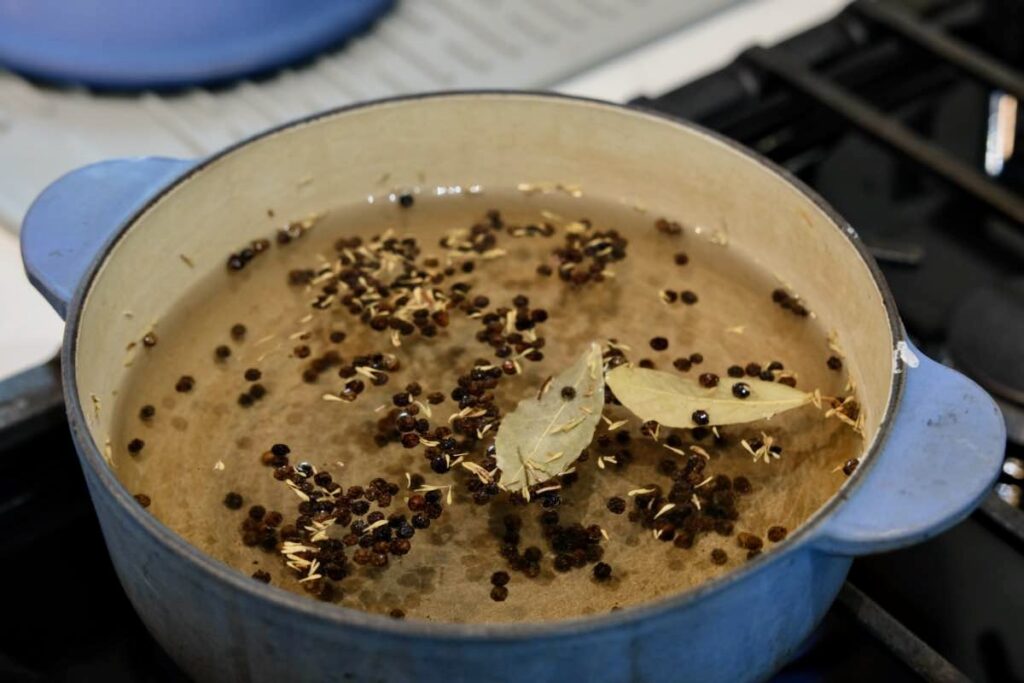
- To a saucepan, add 1 quart (1 liter) water along with the Kosher salt and black peppercorns. Bring to a boil and stir with a wooden spoon, allowing the salt to dissolve completely. Add the herbs, and set aside to cool (or refrigerate). This is your brining base.
Step 4
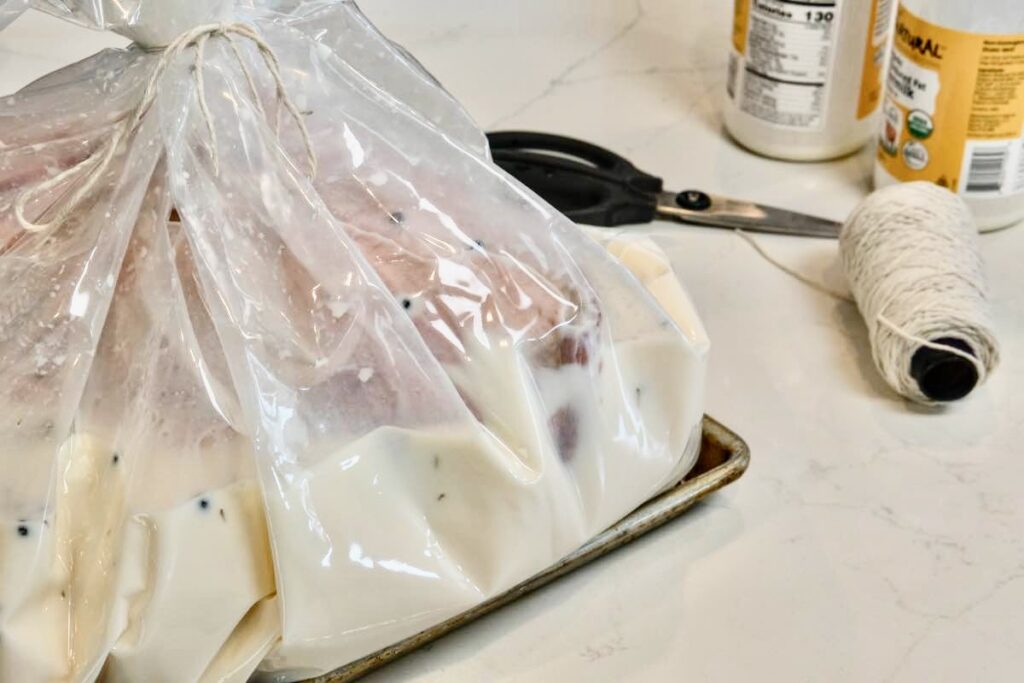
- I like to do this next part in the sink. Place your turkey in your brining bag and add the gallon of buttermilk. Now add your brining base, and carefully swish the liquids around so that they are well-combined. Press as much air out of the bag as you can and seal, making very sure that the bag is sealed. Place the turkey on the bottom shelf of your refrigerator. Brine your turkey for at least 48 hours and up to 72 hours. Once a day, carefully rotate your turkey so that it brines evenly.
Step 5
- When you are ready to make your turkey, transfer the brining bag to the sink. Carefully remove the turkey and discard the brine. Allow it to drain in the sink while you prepare the roasting pan.
Step 6
- Move your oven rack to the lower third of your oven. You may also need to remove your top oven rack, or move it to the highest part of the oven, to accommodate the turkey. Preheat your oven to 400°F (200°C).
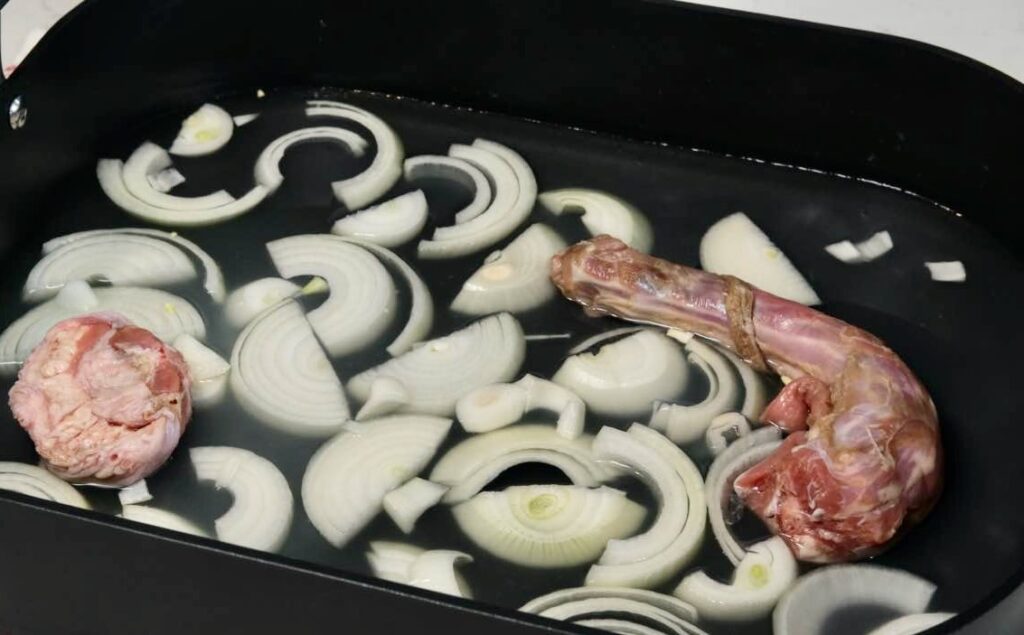
- Add the turkey neck, tail, and the quartered onions to the bottom of your roasting pan. Pour 1 bottle of dry white wine over all, and add 2 cups (475mL) of water. Nest the roasting rack in the roasting pan, jostling onions out of the way as needed.
Step 7
- Gently pat the turkey dry with paper towels and place it breast-side up in the roasting rack.
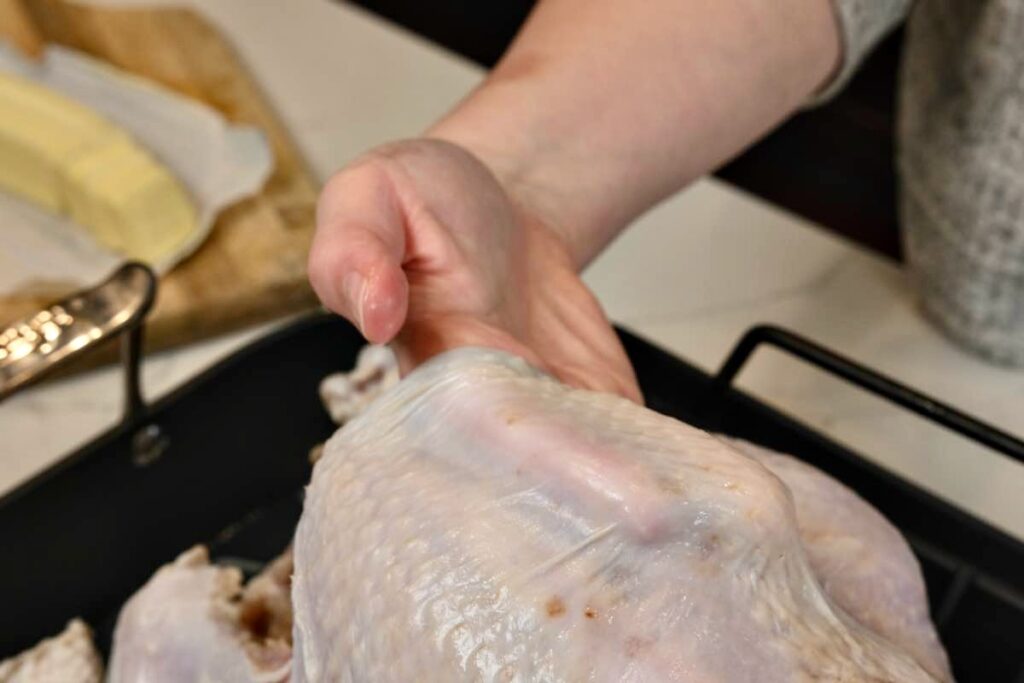
- Carefully separate the skin from the meat and stuff one stick of butter under the skin, distributing it as evenly as you can.
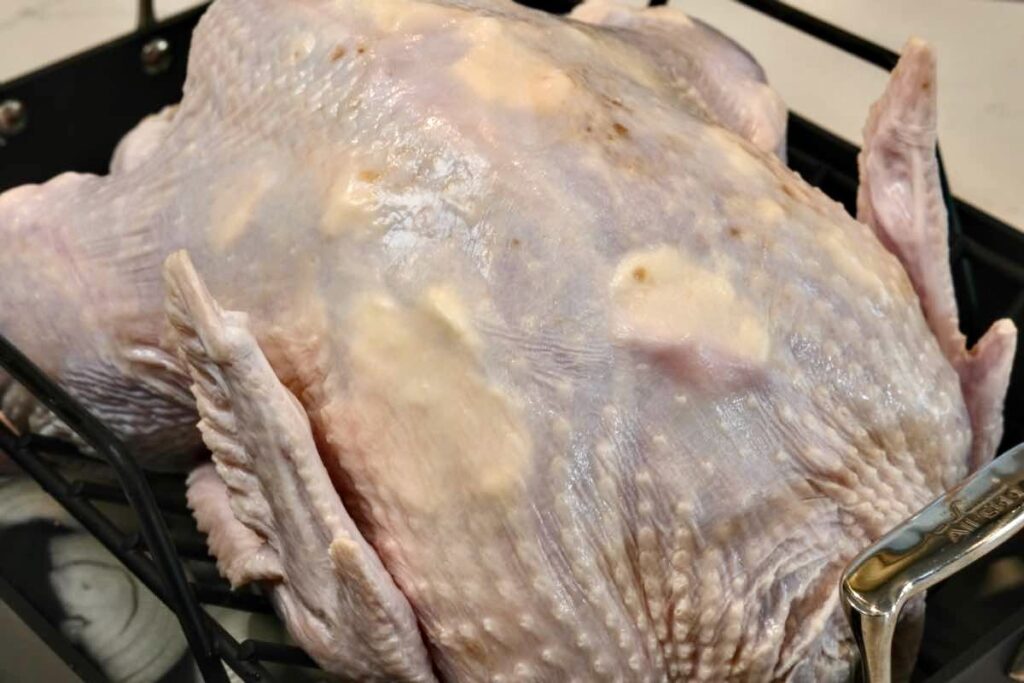
- Grind fresh black pepper over the bird (because there was salt in the brine, you don’t need to salt the skin, but you can if you want to).
- If you have a leave-in thermometer (recommended), insert it in the deepest part of the thigh.
Step 8
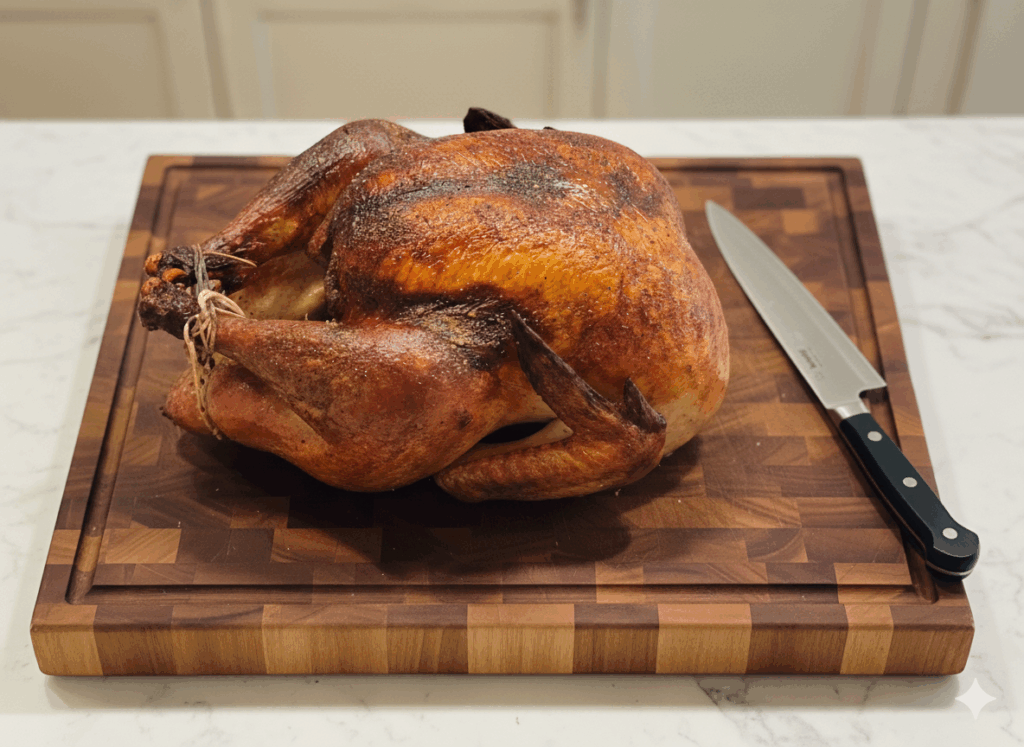
- Roast the turkey for 30 minutes, then reduce the oven temperature to 325°F (160°C). Continue roasting the turkey for around 10-12 minutes per pound. If the turkey is browning too quickly or becomes too dark, loosely tent it with heavy-duty aluminum foil.
- You may start your gravy (next step) while the turkey roasts.
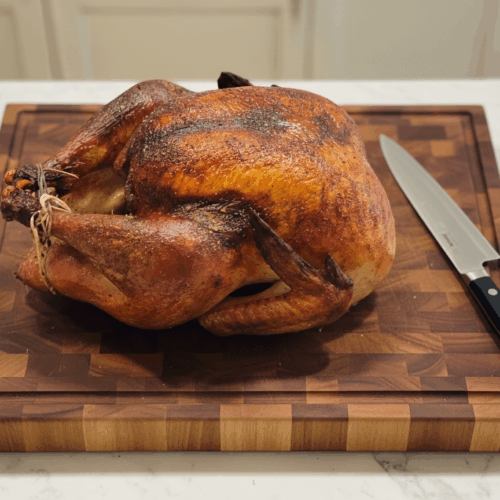
- Remove the turkey when the internal temperature reaches 160°F (71°C) and allow it to rest for 30 minutes before carving.
For the gravy:
Step 1
- Heat your stock in a medium saucepan and keep at a low simmer.
Step 2
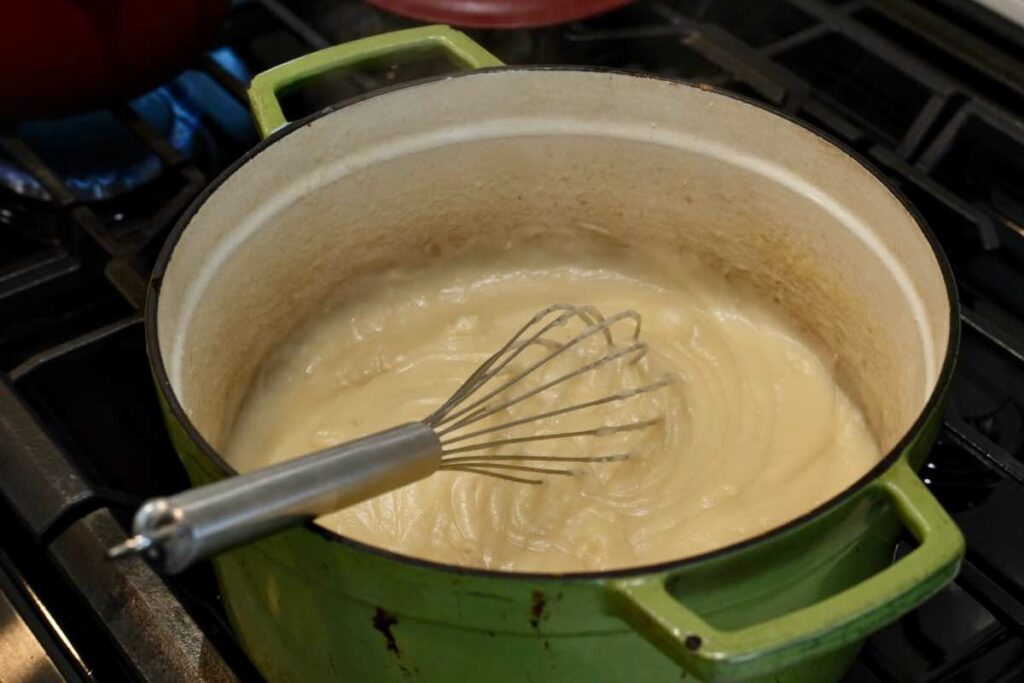
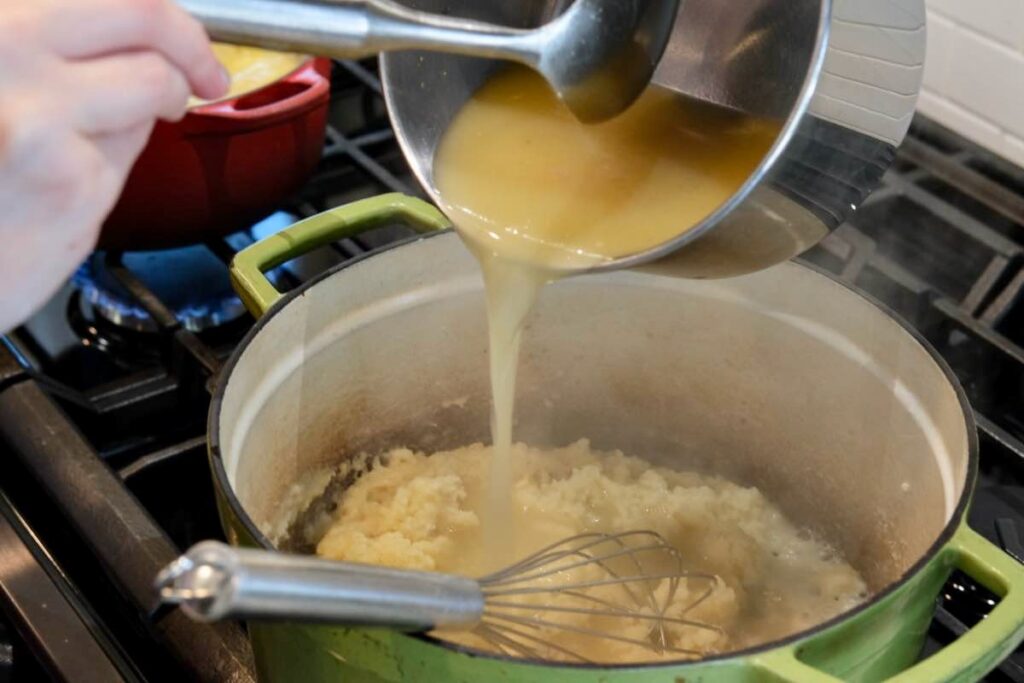
- To make your gravy, begin with a roux. Add the remaining stick of butter to a large, heavy saucepan over medium heat. Once it is melted, whisk in the flour and allow it to cook for 2-3 minutes, continuing to whisk. Slowly pour in the heated stock, continuing to whisk, until you have a thickened mixture. Turn the burner down to its lowest setting.
- Step 3
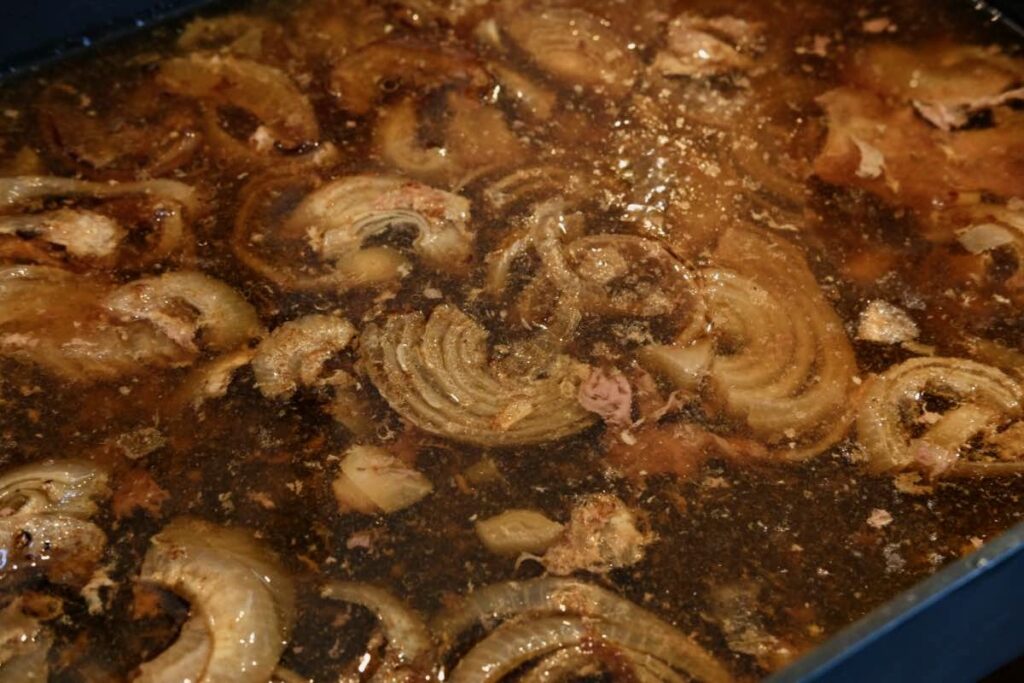
- While the turkey rests, add the turkey drippings to the gravy. I love the quartered onions in the gravy, but for a smoother mixture, you can strain out the onions and serve them as a side dish.
- Step 4
- If you would like your gravy to be thicker, whisk 1 tablespoon cornstarch into 1 tablespoon cold water or milk until smooth and whisk it into the bubbling gravy. Repeat as necessary until you are satisfied with the texture.