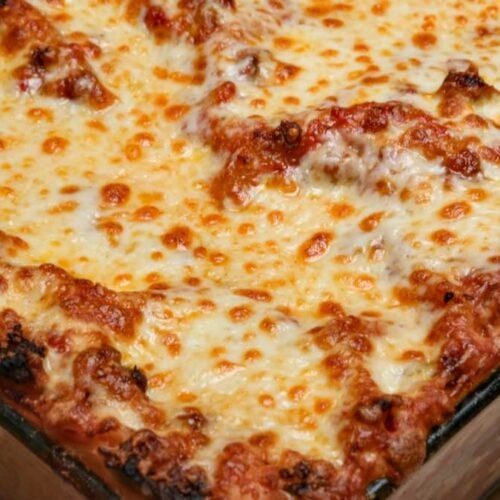
Simple Homemade Lasagna
Learn how to make homemade lasagna with this simple homemade lasagna—layers of rich sauce, creamy ricotta, and perfectly tender pasta baked into cozy perfection.
Equipment
- Kitchen scale or measuring cups and spoons
- Measuring cups and spoons or kitchen scale
Ingredients
- 5 cups (1 kilo) marinara sauce or red sauce
- 1 pound (about ½ kilo) Italian sausage or ground beef (You can buy premade Italian sausage, or make your own)
- 2 cups (500g) whole-milk ricotta cheese
- ⅓ cup heavy cream
- 15-20 (250-300g) lasagna noodles
- 3-4 cups (350g) mozzarella cheese (shredded)
- ¾ cup (75g) Parmigiano-Reggiano cheese (grated)
Step by Step Instructions
Step 1
- Prepare the marinara sauce as directed, or heat the prepared sauce to a simmer.
Step 2
- In a wide, deep skillet, cook the Italian sausage until done. Pour off the excess fat. Add the meat to the finished marinara sauce, and simmer gently for at least 20 minutes, allowing the flavors to marry.
Step 3
- Add the ricotta cheese to a large bowl, and fold in the heavy cream with a spatula. Set aside.
Step 4
- Preheat your oven to 350°F (170°C) convection, or 375°F (190°C) on regular setting.
Step 5 - Prepare your workspace with:
- • Saucepan of finished meat sauce, with a ladle or large spoon• Bowl of ricotta cheese thinned with cream, with a large spoon • Bowl of shredded mozzarella cheese• Bowl of Parmigiano-Reggiano cheese• Uncooked lasagna noodles• One large platter• One pair of kitchen scissors (in case you need to cut the noodles to fit your pan)• Large, deep casserole to bake your lasagna• Foil-lined sheet pan larger than your lasagna pan• Large, deep pan full of very hot water with a small glug of olive oil (I leave this in my sink, rewarming the water as needed. If your tap water does not come out very hot, fill your pan with almost-boiling water from a teapot or small pot, replenishing as needed).
Step 6 - Prepare the lasagna noodles
- This method softens the noodles just the right amount—they will not overcook in the oven, and will absorb just enough sauce to create the perfect layers. Your lasagna will be neither soupy nor dry.
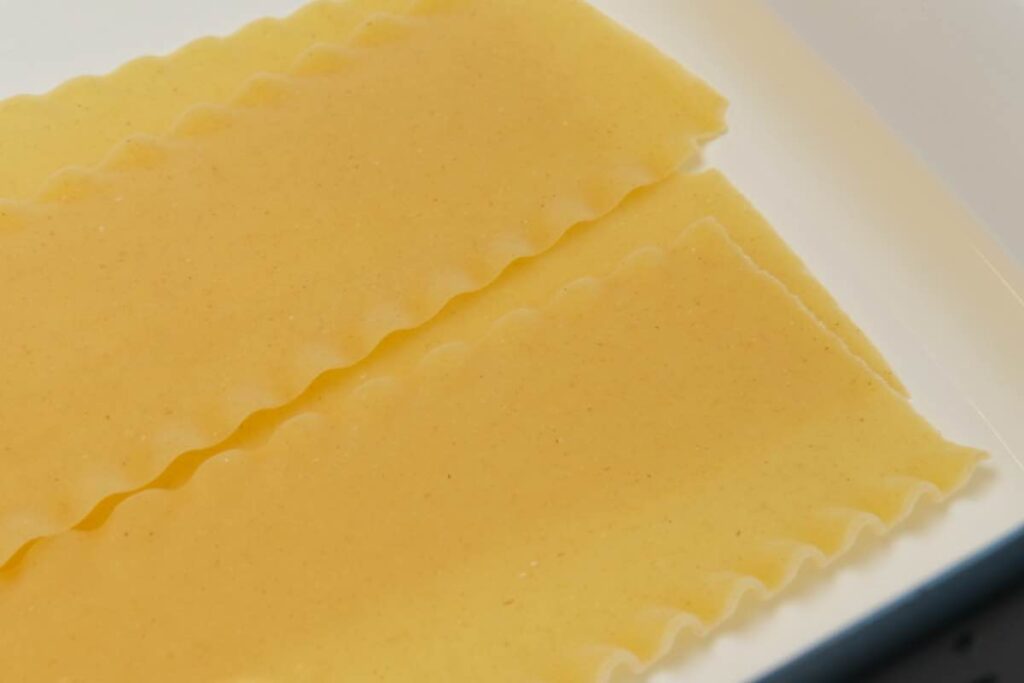
- Determine how many noodles you can fit in each layer of your baking pan (usually 3-4)—better to overlap slightly than to not quite fill the pan, if you have a choice.
- To the pan of hot water, add twice as many noodles as will fit in each layer of your pan. Soak for 10 minutes, agitating slightly once or twice to ensure they do not stick to each other (the olive oil will help with that). After ten minutes, remove the noodles from the water and transfer to the waiting platter.
- While you begin to layer the lasagna, refill the pan with hot water and soak your next batch of noodles, setting a timer for 10 minutes so they do not over-soak.
Step 7 - Build your lasagna
- Set the lasagna pan on the foil-lined sheet pan.
- Determine how many layers you think your lasagna pan will hold (usually, 4-5 layers). Eyeball the ingredients as you go so that you will have enough ingredients for each layer without running out (next time, you will know exactly how many layers your pan holds!)
- Coat the bottom of your lasagna pan with sauce, and add a layer of noodles. If they do not fit in your pan perfectly, use the scissors to trim them.
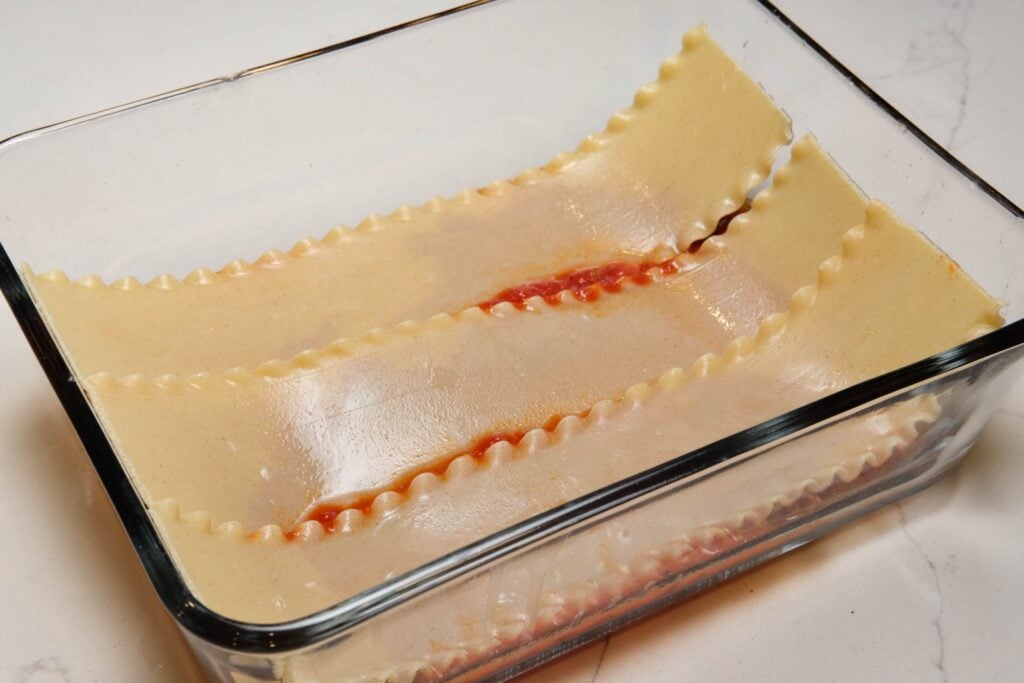
- Spread the first layer of noodles with the ricotta mixture, and top with sauce. Sprinkle a layer of mozzarella, followed by a layer of sauce. Now add another layer of noodles, then ricotta, sauce, then mozzarella.
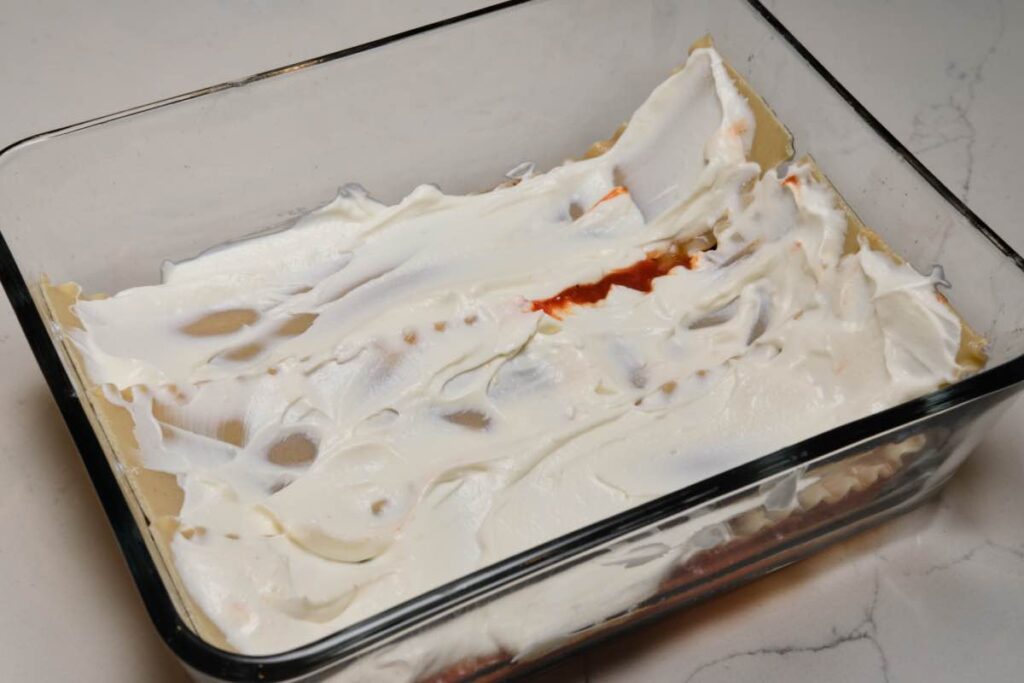
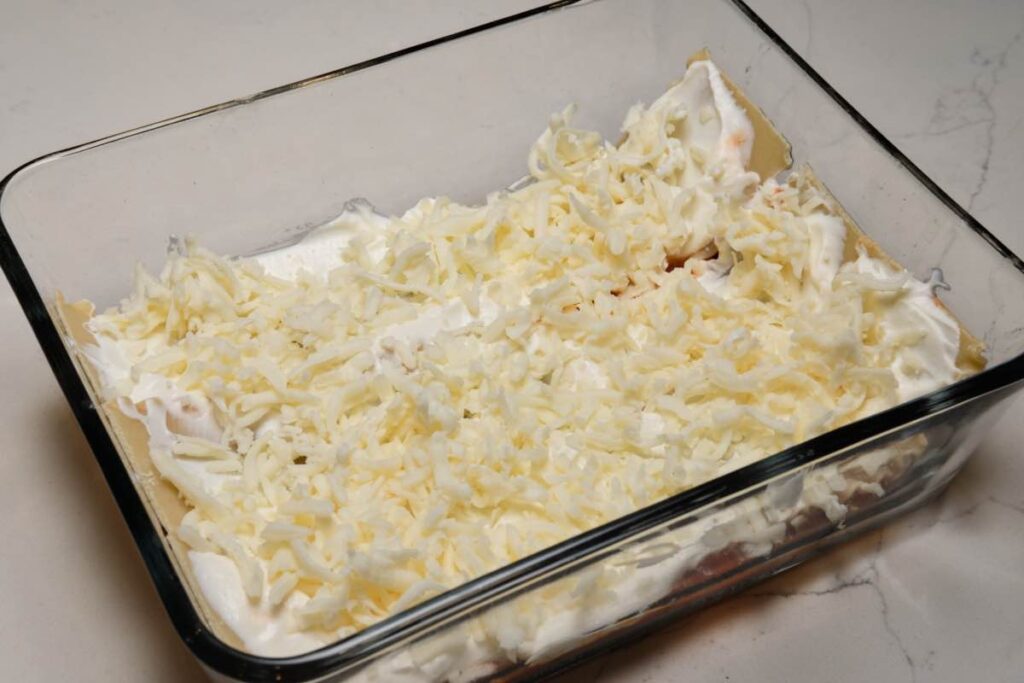
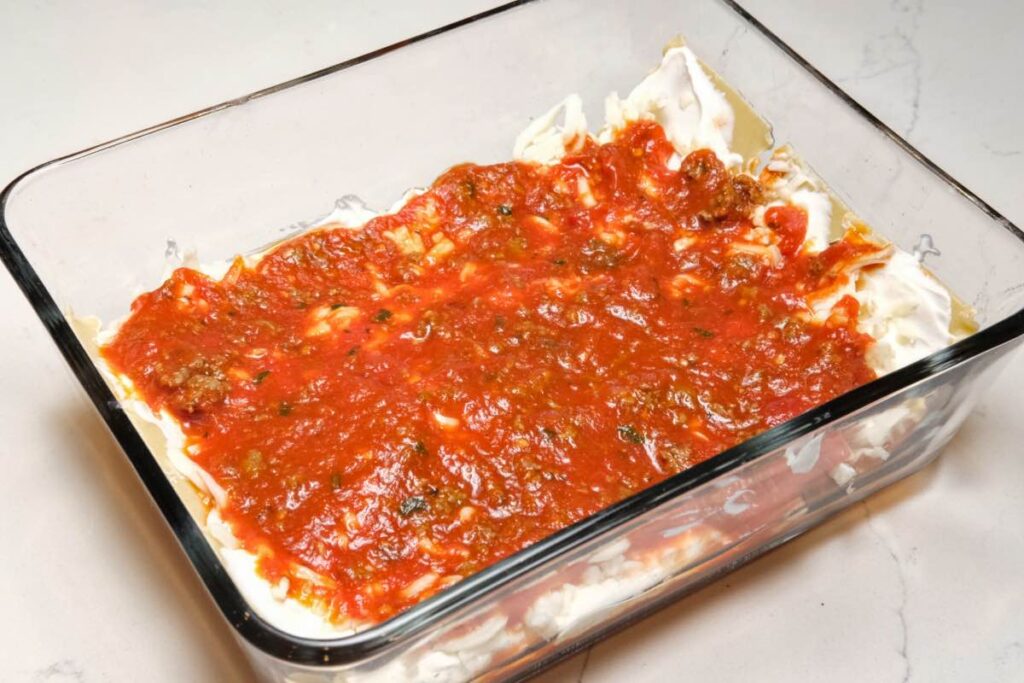
- Continue to build your lasagna in this way, preparing the correct amount of soaked noodles as you go.
- Create the top layer as follows: lasagna noodles, then sauce (do not add any more cheese at this point—you will do so later).
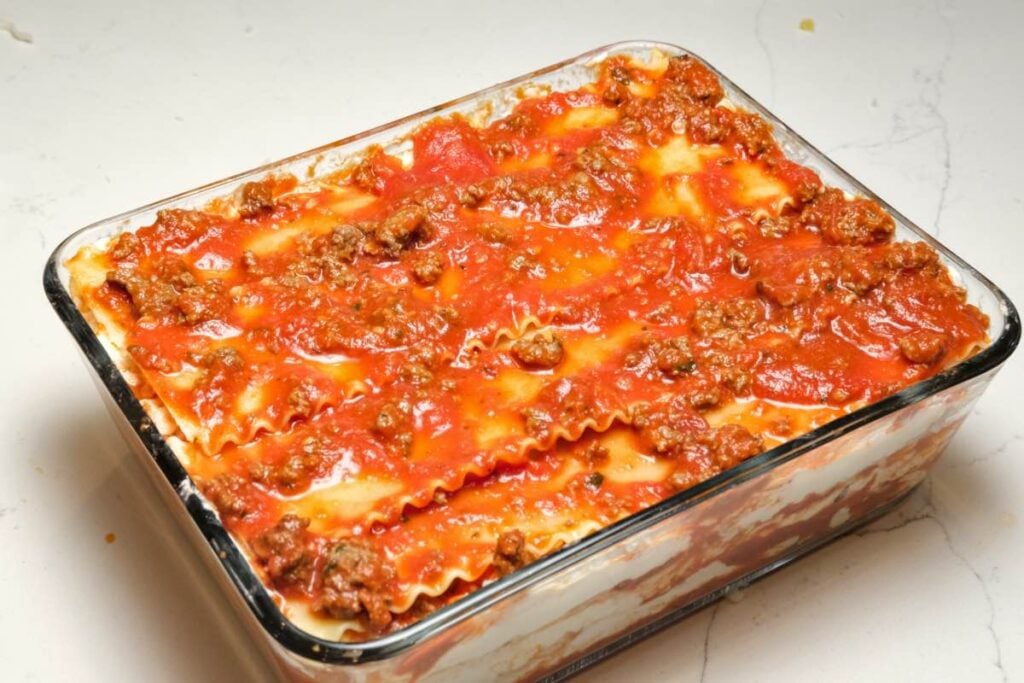
- Cover the lasagna tightly with foil and bake atop the lined sheet pan for 45 minutes. Remove the foil—the lasagna should be hot throughout, and at least 140–150°F (60–65°C) in the center. If it is not, cover and continue baking in 5-10 minute increments until the correct temperature is reached.
- Now remove the lasagna from the oven, and discard the foil. Sprinkle a generous layer of mozzarella, and the reserved Parmigiano-Reggiano, evenly across the top.
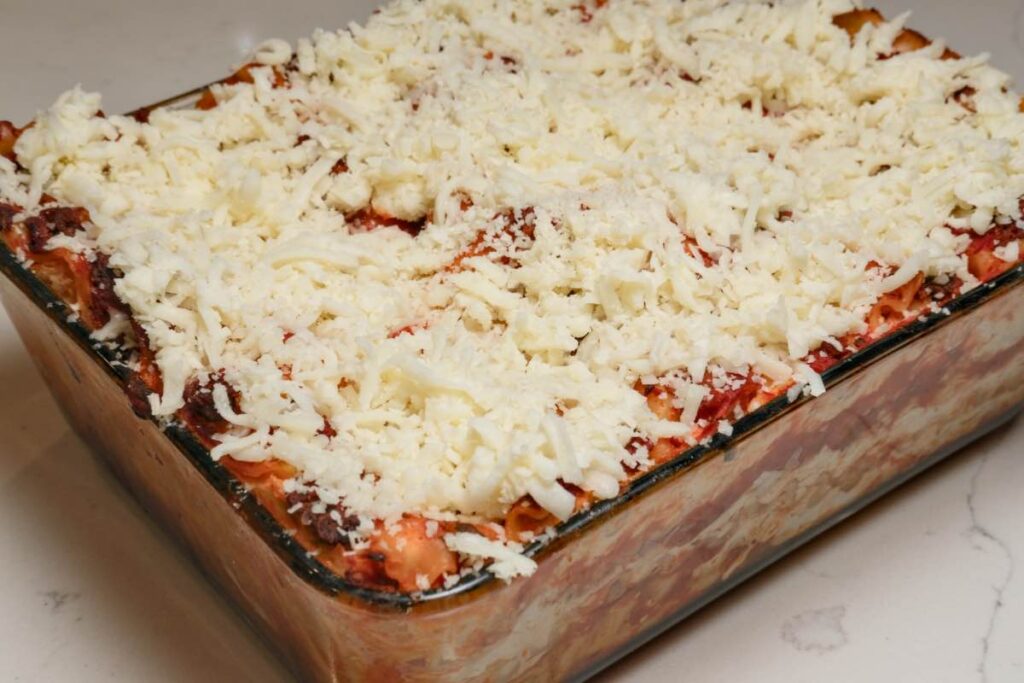
- Return the dish to the oven and bake for another 15-20 minutes, or until bubbly and browned. The center of the lasagna should reach 165°F (74°C); if it has not, you can continue to bake for a bit longer.
- If you would like a browner, crispier top, you may turn your oven to broil and crisp the top, watching carefully to ensure that the lasagna does not burn or dry out. You may need to adjust the oven rack to achieve closer proximity to the broiler.
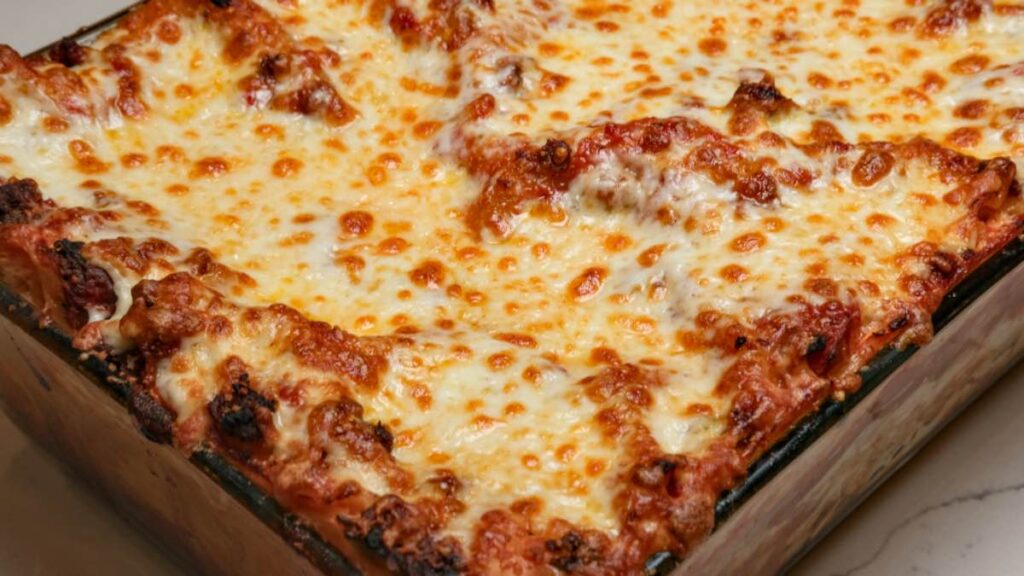
- Allow the lasagna to rest for 15 minutes, and serve hot.