Pavlova with Seasonal Fruit
My Favorite Pavlova Recipe
By: Rachel
Why aren’t we eating more pavlovas? Shatteringly crisp on the outside and marshmallow-soft on the inside, pavlovas are as fun to eat as they are to make and to serve. This pavlova recipe is my favorite—easy to make and delicious every time. It’s the perfect Passover dessert recipe.
- They are easy to make, and incredibly versatile—allowing you to make the best use of whatever fresh fruit is in season.
- With a wildly beautiful texture and pattern, they are showstoppers on the table (especially with bright, vivid fruit).
- You can make them ahead for stress-free serving and entertaining.
- They are perfect for a variety of dietary restrictions—free of dairy and gluten. You can even make them vegan.
- Pavlovas are pareve and kosher for Passover (see notes below).
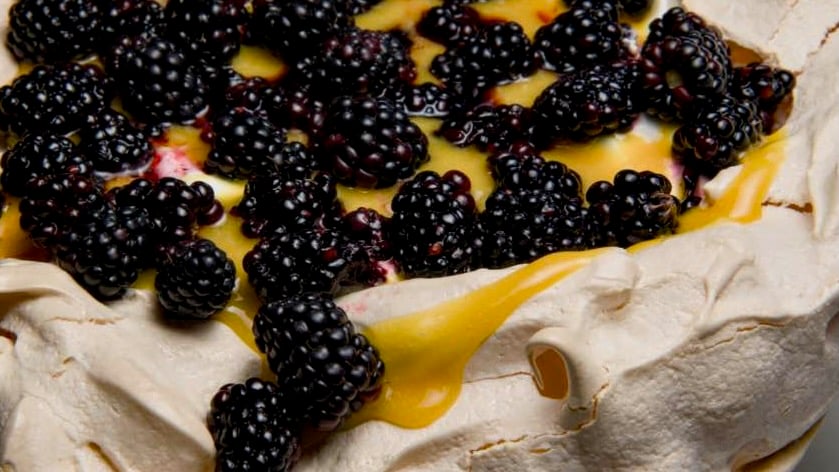
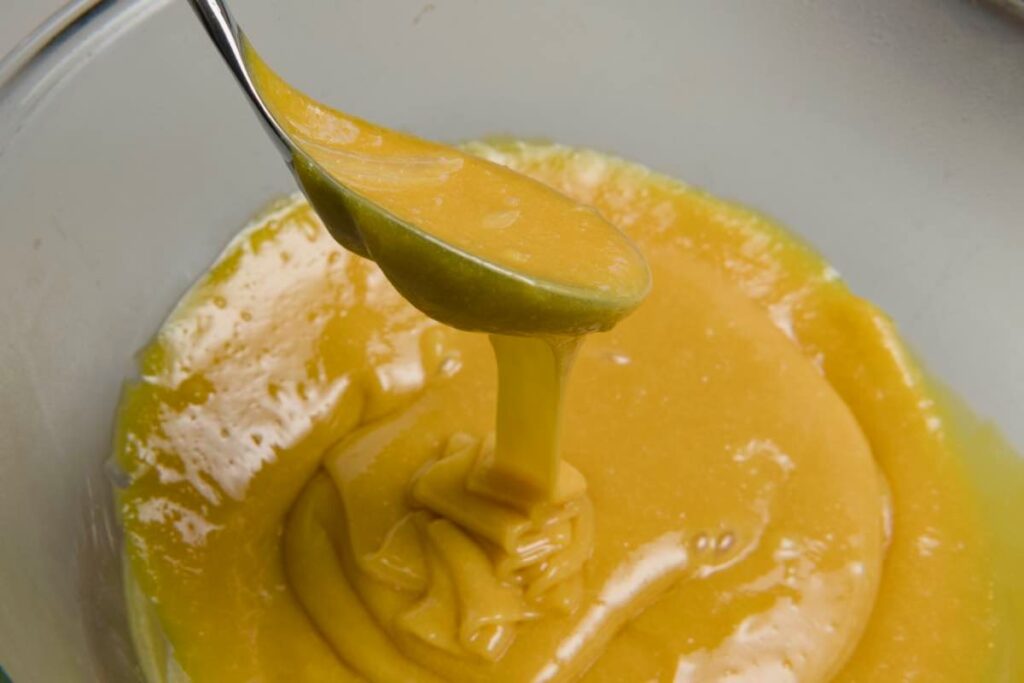
Read on for my tips and tricks for making these beautiful and delicious showstoppers, along with filling options for every season. The filling for this version includes one of my favorite combinations: passionfruit curd, macerated blackberries, and classic whipped cream.
The Only Pavlova Recipe You’ll Ever Need: The Perfect Dessert for Entertaining
Several months ago, I enjoyed a small dinner with close friends—one of those wonderful nights where we drank wine and hung out in the kitchen together, taking our time with each dish and spoiling ourselves with the best ingredients. We made our own pasta dough had homemade ravioli; we made whole-roasted beef tenderloin stuffed with wild mushrooms; we had panzanella salad with homegrown tomatoes.
For dessert, Roberta presented a stunning pavlova: a wide, concave meringue nest piled high with juicy summer fruit. There were golden peaches and nectarines nestled among plump raspberries and glossy blackberries, all atop a generous cloud of freshly-whipped cream. I knew I needed to create my own pavlova recipe so that I could have this amazing dessert anytime I wanted it.
The Pavlova Recipe That Reminded Me of a Childhood Favorite
As I dug in, I couldn’t help but feel that it reminded me of something. It took me a few bites to realize what it was… Lucky Charms.
Okay, not quite. The pavlova was way more delicious than Lucky Charms. But pavlovas actually have quite a bit in common with those little marshmallows. Meringues and marshmallows are both light and fluffy sweets made by trapping air in sugar. Meringues use egg whites, while marshmallows use gelatin and simple syrup. While marshmallows are typically soft inside and out, meringues have a deliciously crispy exterior with a beautifully soft interior.
Each time I eat one, I wonder why we don’t have pavlovas more often. They are easy to make, visually stunning, and versatile—allowing you to feature whatever beautiful fresh fruits are in season. Pavlovas are satisfying, yet still light.
Note on timing: Allow plenty of time to prepare your pavlova—ideally, it should bake for up to 90 minutes and cool inside the oven for up to 3 hours. You can easily make it a day ahead of time.
Passover Desserts: Are Pavlovas Kosher for Passover?
Passover desserts are notoriously difficult. Flour cannot be used, and many people prefer not to use dairy, since meat is served at the seder meal. Pavlovas, which are naturally free of grains and dairy, make for an ideal Passover dessert.
Note on kashrut: Holiday dietary customs vary. Please note the following:
- If you do not consume corn during Passover, you can substitute the cornstarch for potato or tapioca starch.
- Be sure that your vanilla carries Passover certification, or that it does not include grain-based liquors. You may also use the scrapings from a vanilla bean or omit the vanilla flavoring.
- Use a vegan whipped cream, such as coconut whipped cream, for a pareve Passover dessert.
What Else Should I Serve For Passover?
Start your meal with Miriam’s Cup, a beautifully light and refreshing cocktail featuring flavors of elderflower and grapefruit. The classic starter for Passover is homemade matzo ball soup with fluffy matzo balls. For a main dish, you can move into this unique and delicious lamb and matzo pie, which has been a favorite on my seder table for many years. Or for a fresh, seasonal option, try this Chicken with Spring Vegetables.
Seasonal Fillings For Perfect Pavlovas
Below are seasonal fillings for your pavlova. You don’t have to make fruit curd, but it’s the perfect way to use up the egg yolks!
Spring
- Strawberry/Strawberry-rhubarb
- Apricots
- Blueberries
- Lemon curd
- Whipped cream flavored with lemon zest or elderflower
Summer
- Cherries (sour or sweet)
- Raspberries, blueberries, and blackberries
- Peaches and nectarines
- Mango or passionfruit curd
- Toasted coconut
- Whipped cream flavored with lime zest, mint, or basil
Fall
- Figs
- Poached pears
- Apples
- Plums
- Pear curd
- Whipped cream flavored with cinnamon, cardamom, or maple
Winter
- Pomegranate
- Citrus
- Cranberry curd
- Whipped cream flavored with ginger, chocolate, or blood orange zest
Beverage Pairing
By: Olivia
The seasonal fruits you choose for the pavlova open up fun possibilities for beverage pairings! If you lean berry-forward, consider a sparkling rosé to echo the fruit flavors. For autumnal fruits like pears and apples, a late harvest Riesling is a beautiful match. And if you’re working with citrus or tropical fruits, try a Moscato d’Asti. Each of these brings enough sweetness to complement the dessert, along with the acidity needed to cut through the pavlova’s creamy texture.
Pavlova with Seasonal Fruit
Ingredients
For the pavlova
- 4 large egg whites at room temperature
- 1 cup (200g) superfine sugar or process white sugar in a blender
- 1 teaspoon vanilla extract
- 1 teaspoon cornstarch
- 1/2 teaspoon cream of tartar
- 1 teaspoon lemon juice
Optional fillings
- Macerated seasonal fruit
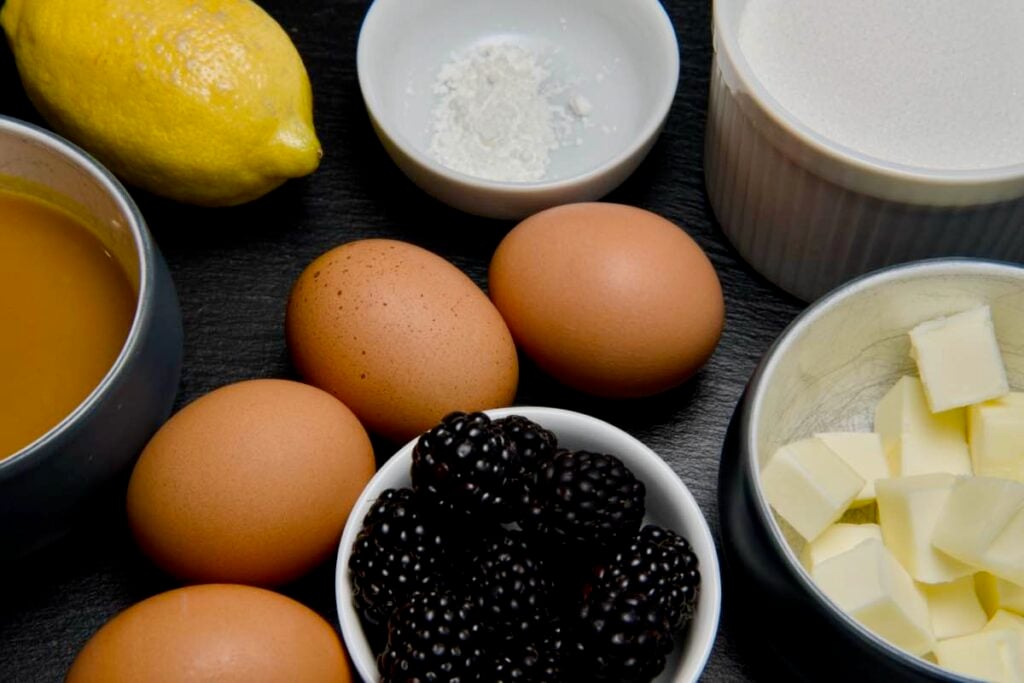
- Fruit curd I love to make fruit curd for pavlovas—it's the perfect way to use up those four egg yolks!
- Freshly-whipped cream
For the passionfruit curd
- ½ cup (120g) passionfruit purée
- ½ cup (100g) sugar or to taste—less for a tart curd, more for a sweet curd
- 4 large egg yolks
- ¼ teaspoon kosher salt
- 5 tablespoons (70g) unsalted butter cubed
Step by Step Instructions
For the pavlova:
Step 1
- Preheat oven to 300°F (150°C) and line a large sheet pan with parchment. Using a Sharpie, trace a round pan to draw a circle on the parchment. Flip the parchment over.
Step 2
- Beat egg whites on medium until foamy, about 1 minute. Add the cream of tartar and beat until soft peaks form.
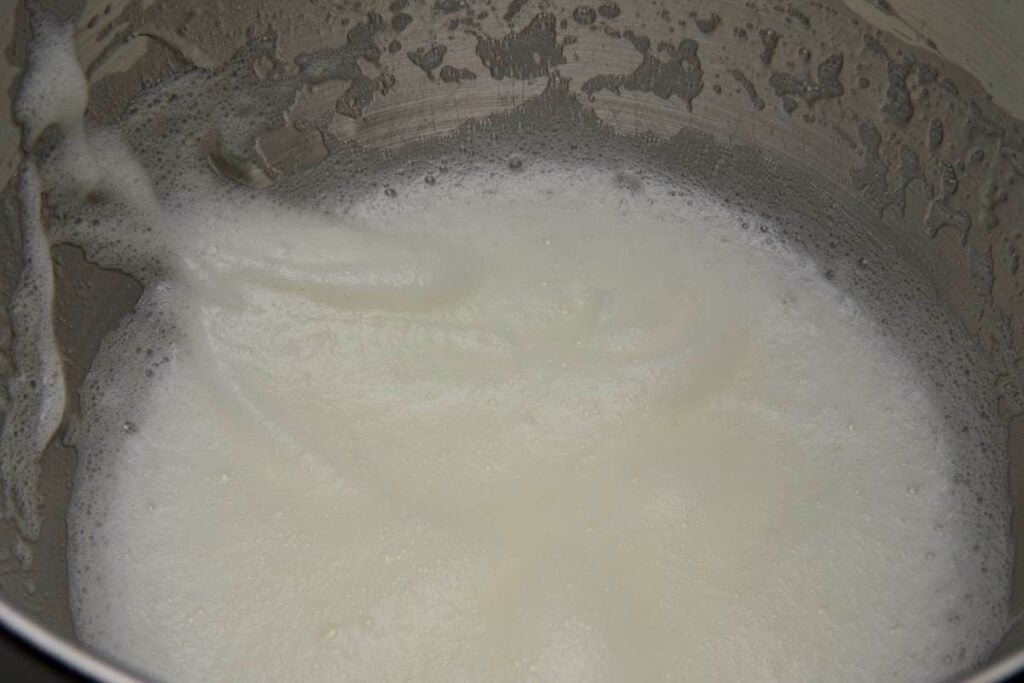
- Increase speed to medium-high. Add the sugar, 1 tablespoon at a time, waiting about 15 seconds between additions. This will take 3-4 minutes.
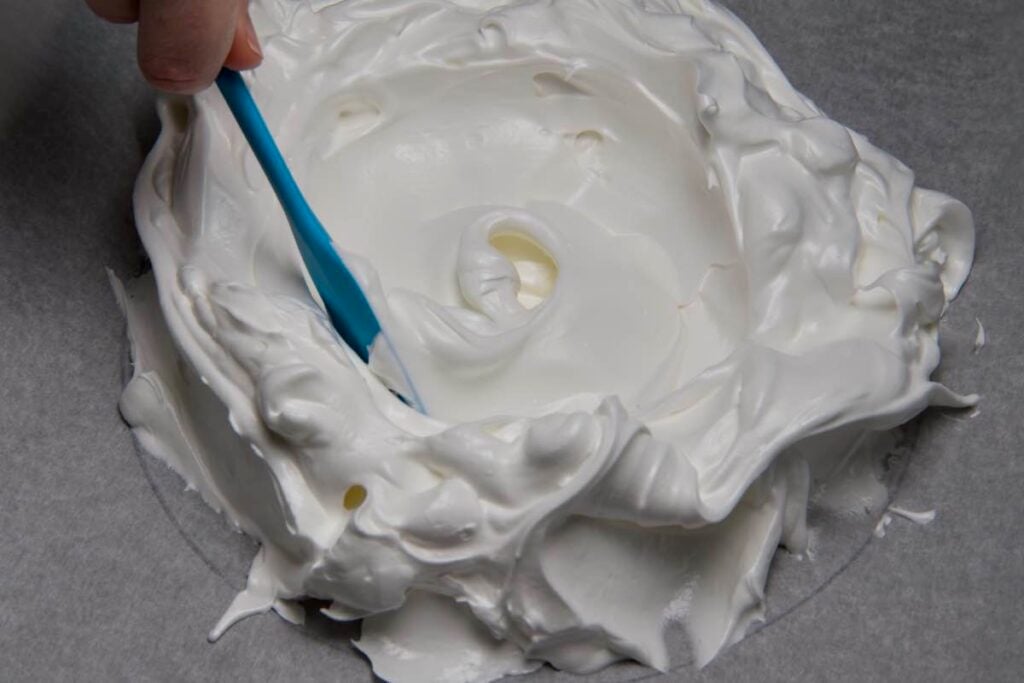
- Now beat on high until very stiff peaks form. Gently fold in the vanilla, cornstarch, and lemon juice.
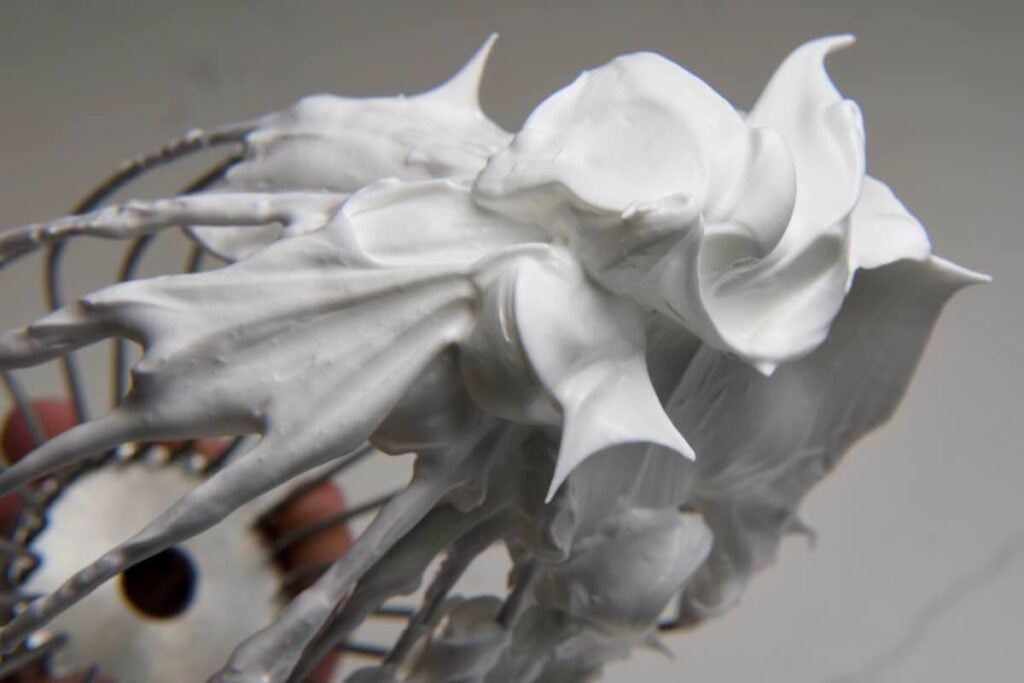
Step 3
- Pile the meringue into the marked circle on the sheet pan. Shape into a high mound with a shallow well in the center, with high sides to hold the filling.
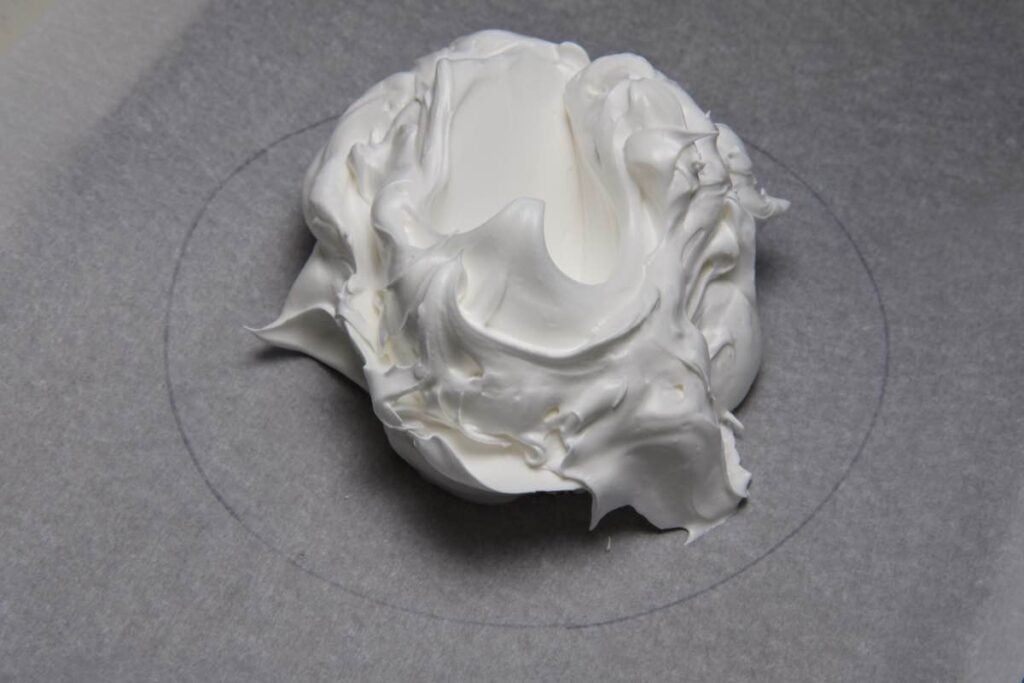
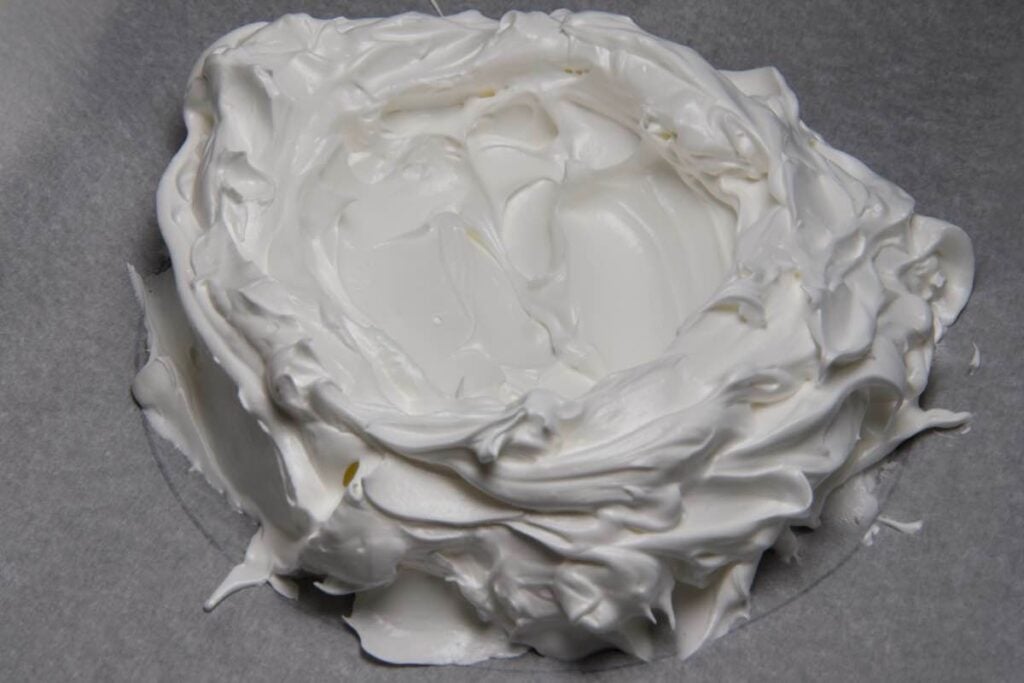
- Bake in the oven and immediately reduce the temperature to 225°F (110°C). Continue to bake for 90 minutes, until dry on the outside with a pale ivory color. Do not open the oven while the pavlova bakes.
Step 4
- Turn the oven off and prop the oven door open slightly with a wooden spoon. Allow to cool in the oven with the door slightly ajar, like a cheesecake, for 2-3 hours (longer is better to prevent cracking).
Step 5
- Fill with whipped cream. Add curd if using (recipe follows), then top with macerated and fresh fruit.
For the passionfruit curd:
Step 1
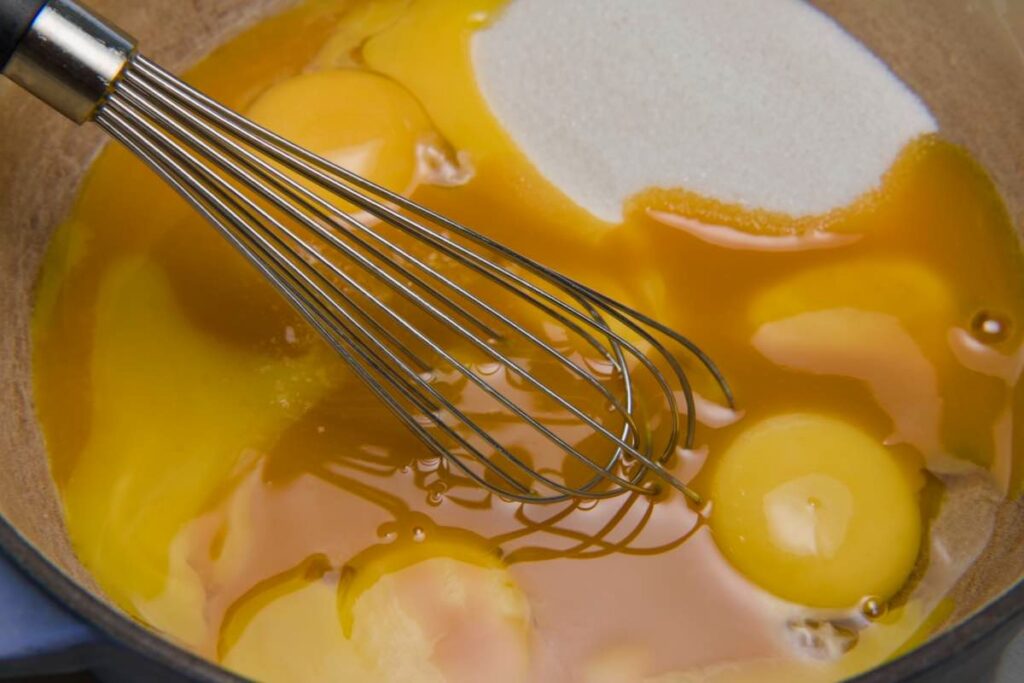
- In a heavy medium saucepan, whisk together the passionfruit purée, sugar, eggs, yolks, and kosher salt until smooth.
Step 2
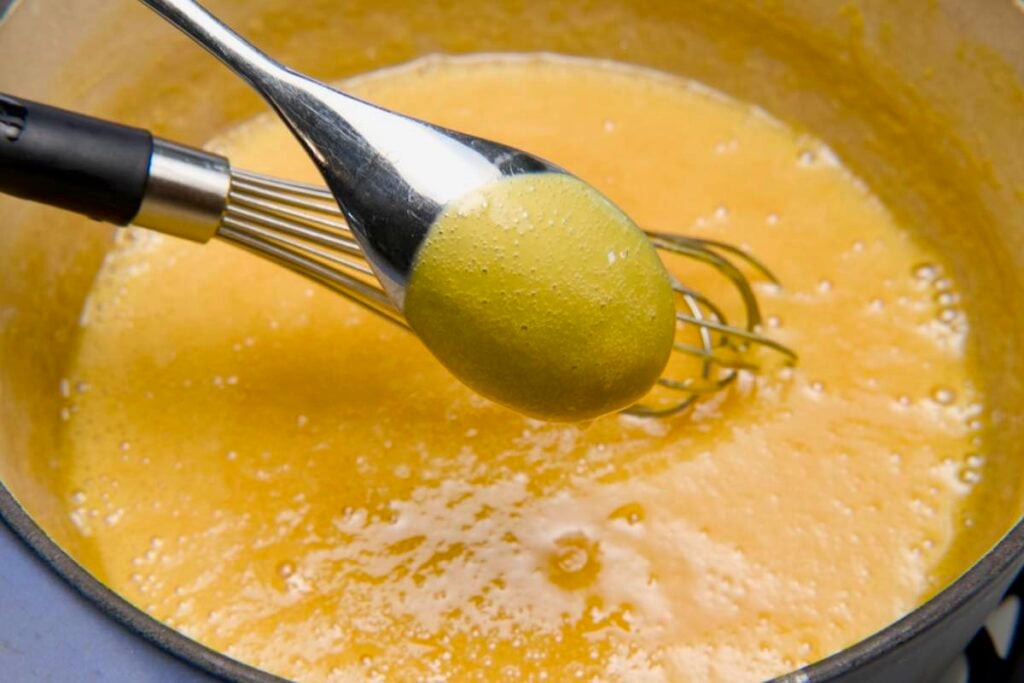
- Over low heat, cook the curd, whisking regularly, until it thickens and coats the back of a spoon. Do not allow it to simmer or boil.
Step 3
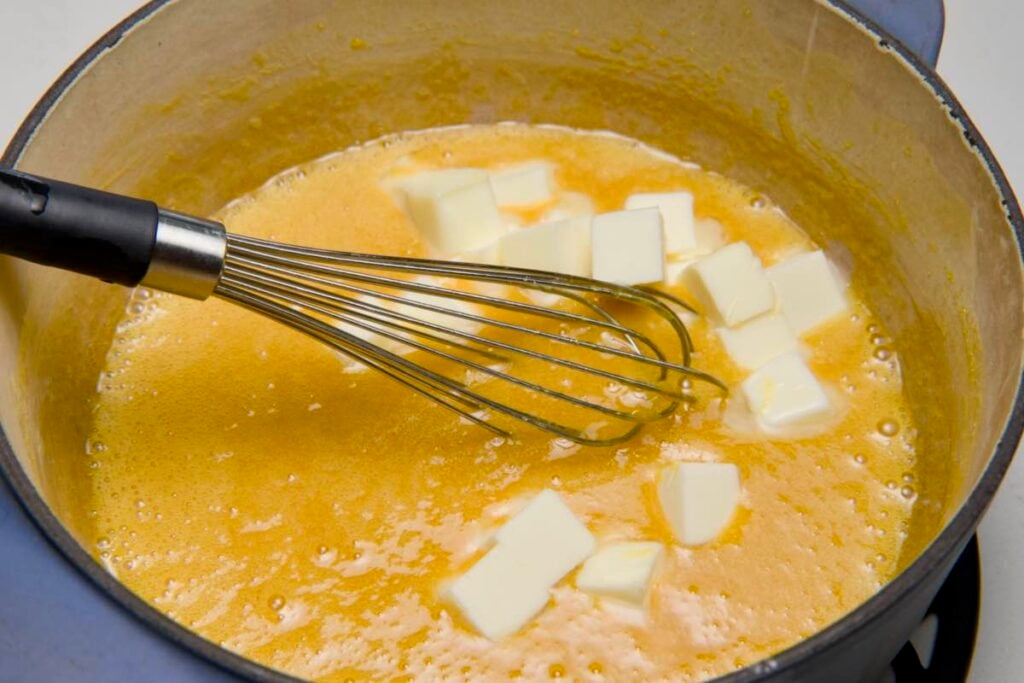
- Remove from heat and whisk in butter a few cubes at a time until fully melted and glossy. Strain, if desired, for a smooth texture. Transfer to a heatproof bowl and chill in the refrigerator for 2 hours or until cold.
For the blackberries:
- For 1 ½ cups (200g) blackberries, mix half with 2 tablespoons sugar and 1 tablespoon lemon juice. Allow to sit for 20 minutes.