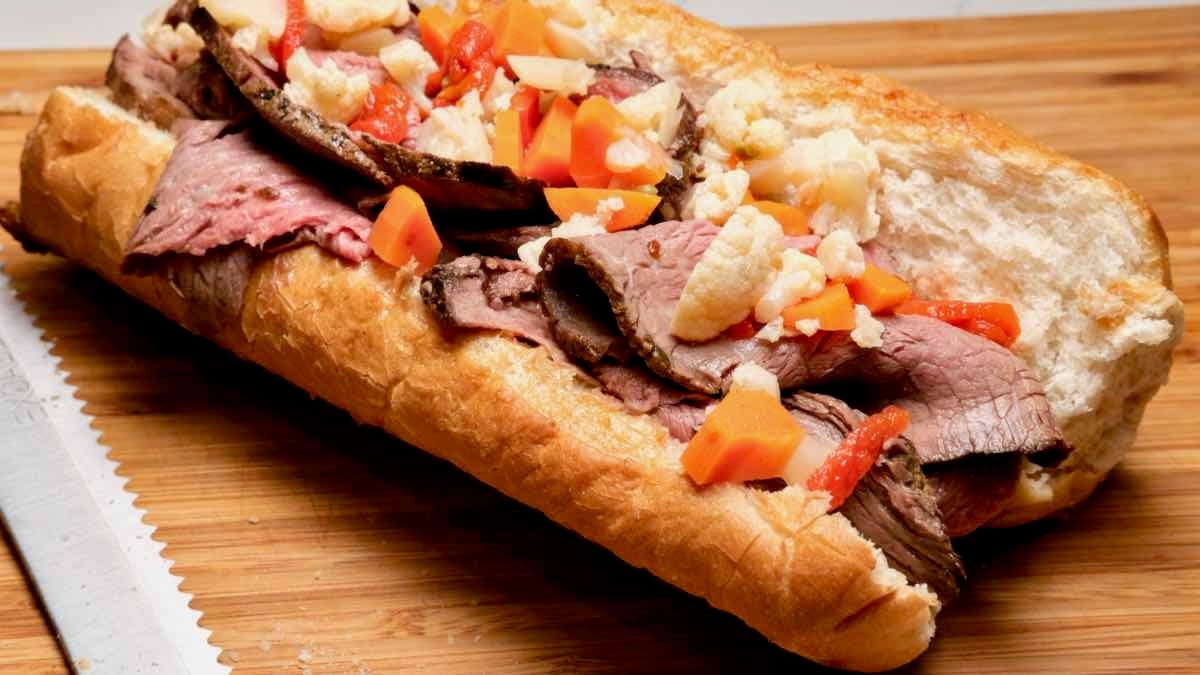
This Chicago-Style Italian Beef Sandwich Lives Up to the Hype
About this Recipe
By: Rachel
Thanks to The Bear, the Chicago-style Italian beef sandwich is finally getting the attention it deserves. This spicy, savory, jus-drenched masterpiece has deep roots in Chicago’s food culture—and now, it’s trending everywhere. If you’ve never tried a homemade Chicago-style Italian beef sandwich before, you’re in for something special.
Why The Bear Has Everyone Talking About the Italian Beef Sandwich
The hit FX show The Bear is back for its fourth season. If you haven’t seen it, I won’t spoil it for you. What I will say is that this show feels like training for a marathon. It’s incredibly stressful, it feels like a LOT of work, and it isn’t entirely relaxing. But once you have finished, you feel that you have done something truly worthwhile.
What Is a Chicago-Style Italian Beef Sandwich?
In its first season, the show centers around a struggling restaurant in Chicago that sells a true local delicacy—the iconic Italian beef sandwich. The dish is more than just food; it’s a staple of Chicago’s culinary identity. If you have not tried an Italian beef sandwich, let me fill you in.
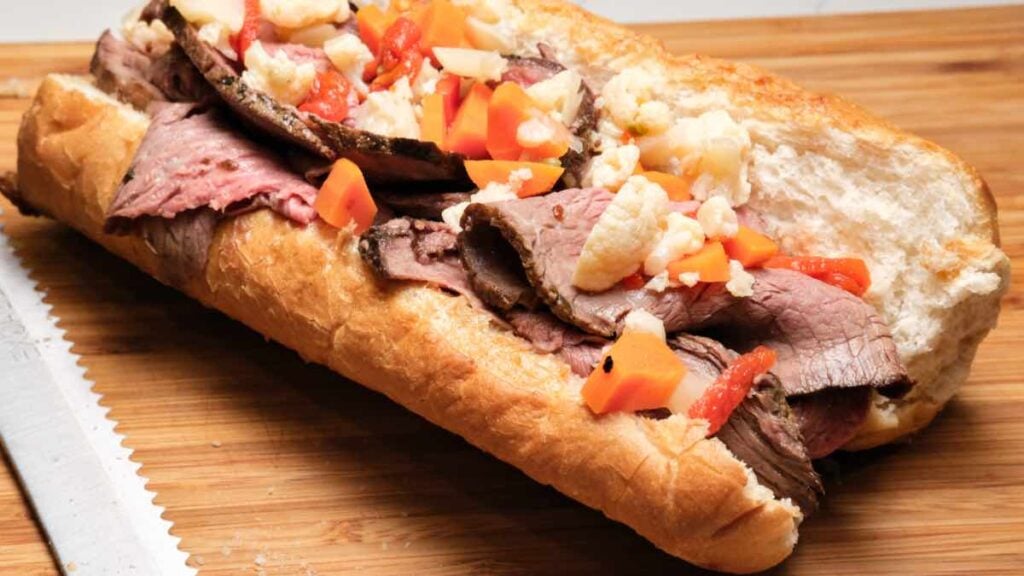
French bread is piled high with thinly sliced roast beef and topped with giardiniera. Giardiniera is a spicy mix of pickled vegetables that can be hot or sweet. Then comes the best part: the whole sandwich is dipped in rich, flavorful braising liquid and served hot to the hungry diner.
First Time Trying Italian Beef? Here’s Why You’ll Love It
You don’t have to be in Chicago—or work in a high-stress restaurant kitchen—to appreciate the beauty of this sandwich. Watching The Bear might introduce you to the culture behind it, but making it at home is what really sold me.
Prior to watching The Bear, I had not tried the Italian beef sandwich. Friends, I had no idea what I was missing! This sandwich is so delicious that we’ve been eating it at my house on repeat for a full month. And it is easy to make—so you don’t have to travel to Chicago to try it.
My Go-To Method for Making a Homemade Chicago-Style Italian Beef Sandwich
I just knew I had to figure out how to recreate this at home—and it turns out, it’s totally doable with a few simple steps and some patience. You won’t get the full Chicago deli vibe, but you’ll come close, and honestly, that’s more than enough.
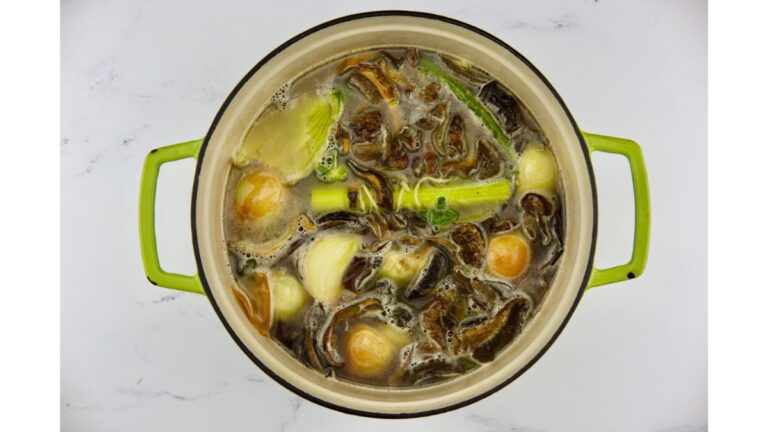
For the beef, I like to start with a lean cut—top round or sirloin tip works really well, though chuck is a great option if you want something a little richer. I give it a good sear to build flavor. Then I let it gently simmer in a savory mix of beef stock, soy sauce, and Worcestershire. I sauté the spices and veggies first—no need to peel, not even the onion—which adds even more depth.
After cooking, I chill the meat fully before slicing so I can get those thin, tender slices that are so key to a proper Chicago-style Italian beef sandwich.
From there, it’s all about building the sandwich. I warm the sliced beef in the jus, pile it onto a sturdy French roll, and top it with plenty of giardiniera—hot, sweet, or a mix of both. And be sure to do “the dip” to get your sandwich nice and juicy. The bread soaks up what is honestly the most delicious braising liquid imaginable. It’s so savory and flavorful, you, too, will be making Chicago-style Italian beef on repeat.
Love bold, beefy sandwiches? You might also like this Grilled Beef Banh Mi recipe—a fresh, flavor-packed twist that’s just as satisfying.
Beverage Pairing
By: Olivia
A rich, flavorful sandwich like this deserves an equally complex wine pairing! Wines with acid and spice, like Malbec, Zinfandel, or Bordeaux blends, will complement the beef and peppers. Perhaps unexpected, but Lambrusco would also be spectacular, bringing acidity, fruit, and fizziness that work beautifully to cut through the richness of the sandwich!
Chicago-Style Italian Beef Sandwich
Equipment
- Chef's Knife or meat slicer
- meat slicer for the thinnest meat slices
- Kitchen scale or measuring cups and spoons
- Measuring cups and spoons or kitchen scale
Ingredients
For the Beef
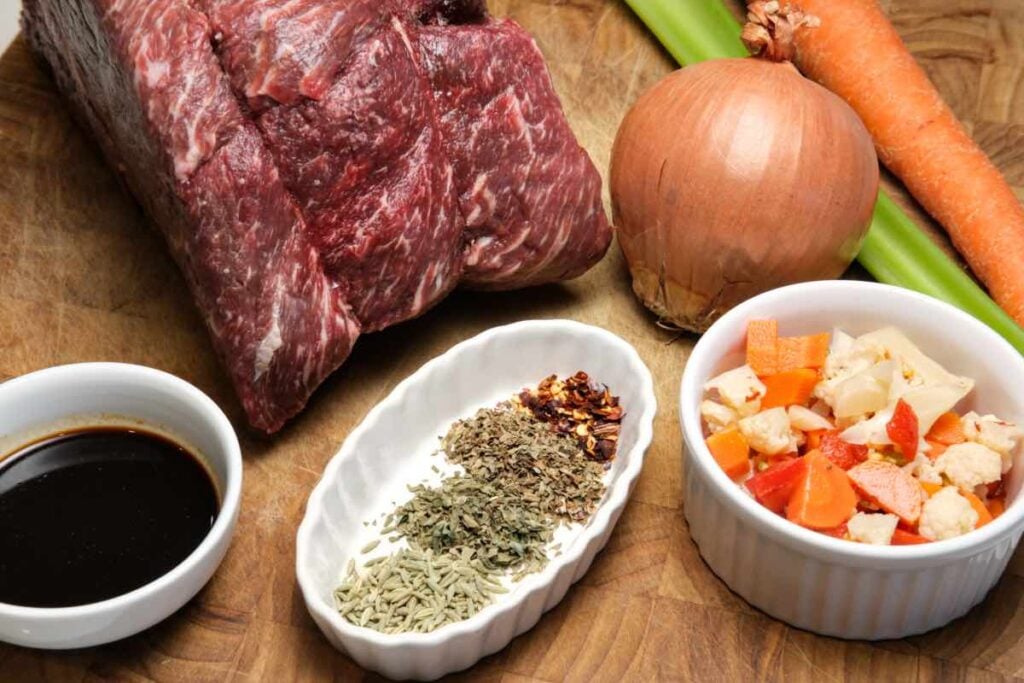
- 3–4 pounds beef (top round, sirloin roast, or eye of round roast)
- Kosher salt and freshly-ground black pepper
- Optional: garlic and onion powder rub
For the Jus (Braised separately)
- 1 tablespoon avocado oil (or other oil with a high smoke point)
- 2 tablespoons unsalted butter
- 1 teaspoon fennel seeds
- 1 teaspoon oregano
- 1 teaspoon dried basil
- ½ teaspoon red pepper flakes
- 1 medium onion
- 1 medium celery stalk chopped
- 1 medium carrot chopped; no need to peel
- 1 head garlic unpeeled and halved
- 1 quart (1 liter) beef stock
- 1 tablespoon “Better than Bouillon” beef base or other beef base or bouillon
- 1 tablespoon Worcestershire sauce
- 1 tablespoon soy sauce
For Assembly
- French bread
- Hot or sweet giardiniera
(You can buy this jarred, but I much prefer making my own. I use the recipe linked here from Nick Evans, omitting the celery and jalapeños and adding fennel. Before refrigerating, I stir in roasted red bell peppers).
Step by Step Instructions
Step 1
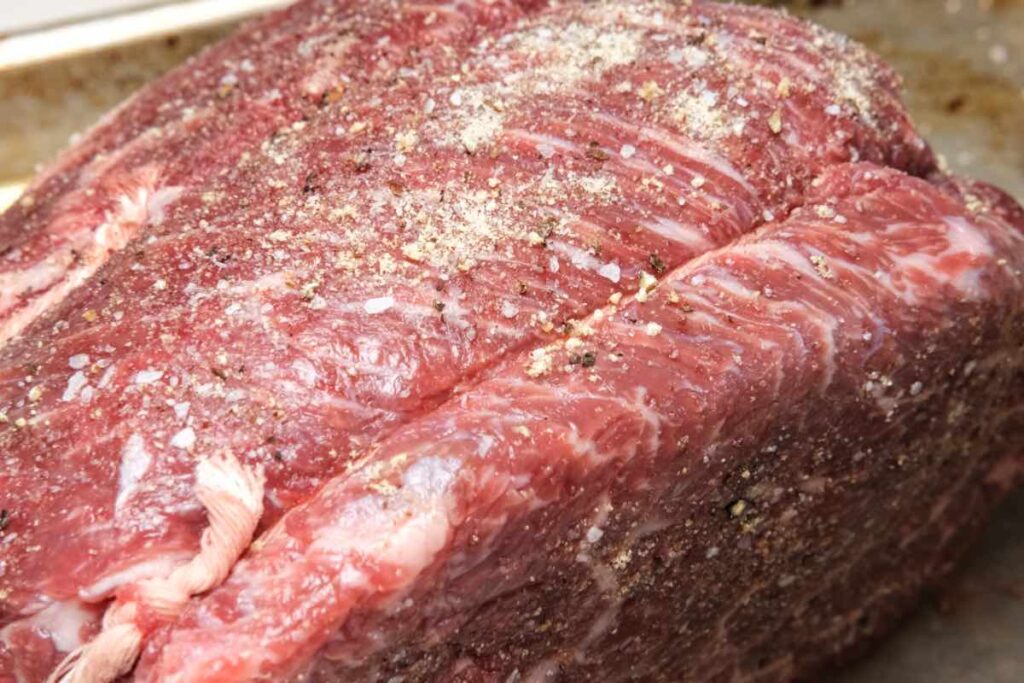
- Rub roast with kosher salt and freshly-ground black pepper (I like to add about a teaspoon each of garlic powder and onion powder for extra flavor, but this is not required. Rub evenly over the roast.If you have time, allow the roast to sit, uncovered, in your refrigerator for at least 24 and up to 48 hours to dry brine.
Step 2
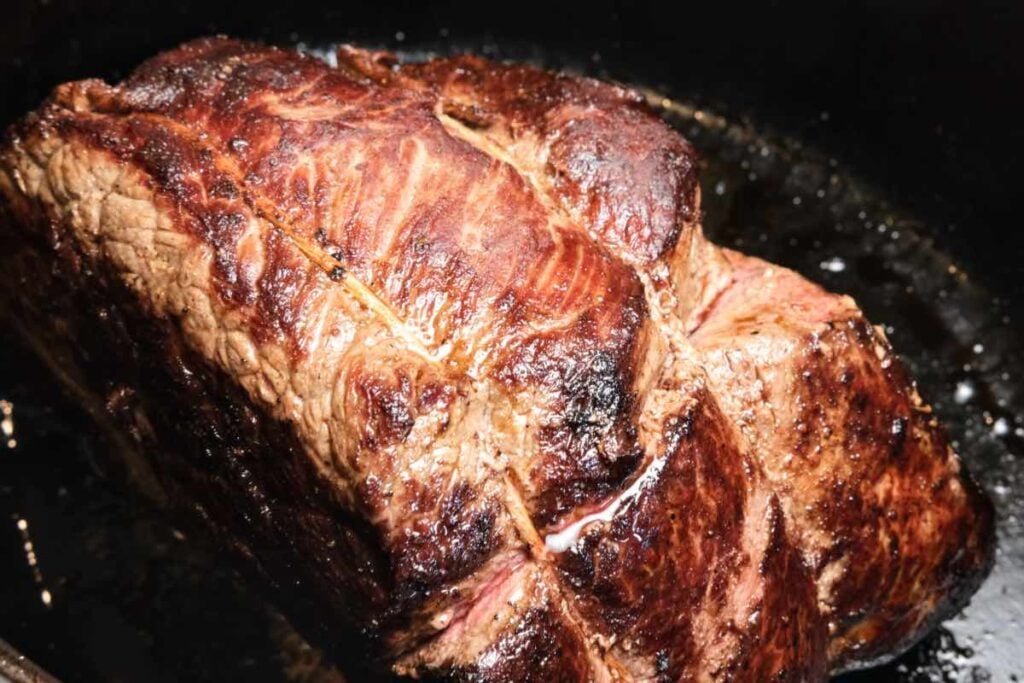
- When you are ready to begin cooking, preheat your oven to 275°F (80°C). I like to cook my meat to medium rare—about 130°F (55°C). For medium, cook to 140°F (60°C); for well-done, 155°F (68°C).Have a sheet pan or platter that will easily hold your beef at the ready, along with a pair of tongs. Prepare your beef by drying it well on each side with paper towels.In a large, deep pan (a Dutch oven or braiser), heat your oil over medium-high until shimmering.Sear the meat well on every side until deeply browned—do not rush this step! It will take around five minutes per side. Resist the urge to check the browning until the meat has been searing for at least three minutes. Once the meat is well-browned on each side, remove it from the pan and set it aside on a platter or sheet pan. Do not clean the pan.
Step 3
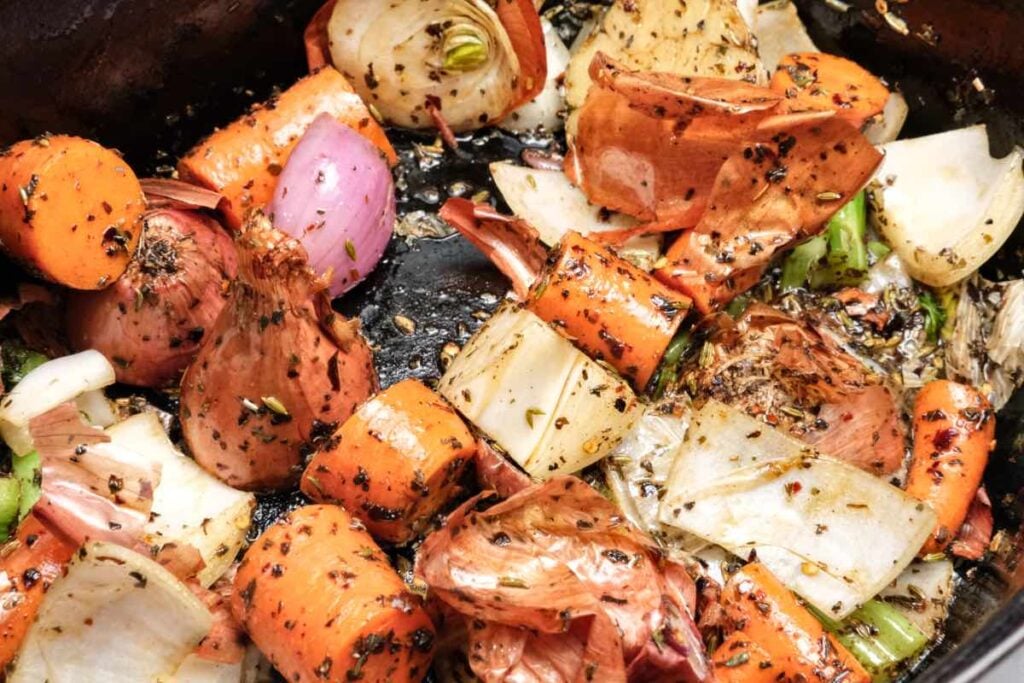
- Turn off the heat and add 2 tablespoons butter to your pan—the residual heat will melt it. Add your spices and stir for 1 minute, allowing them to bloom and release the aromatic flavors.Now return the heat to medium-low and add the vegetables. Allow to sauté for 3-4 minutes, stirring occasionally. Next, deglaze the pan with the beef stock and whisk in the beef base, Worcestershire sauce, and soy sauce.
Step 4
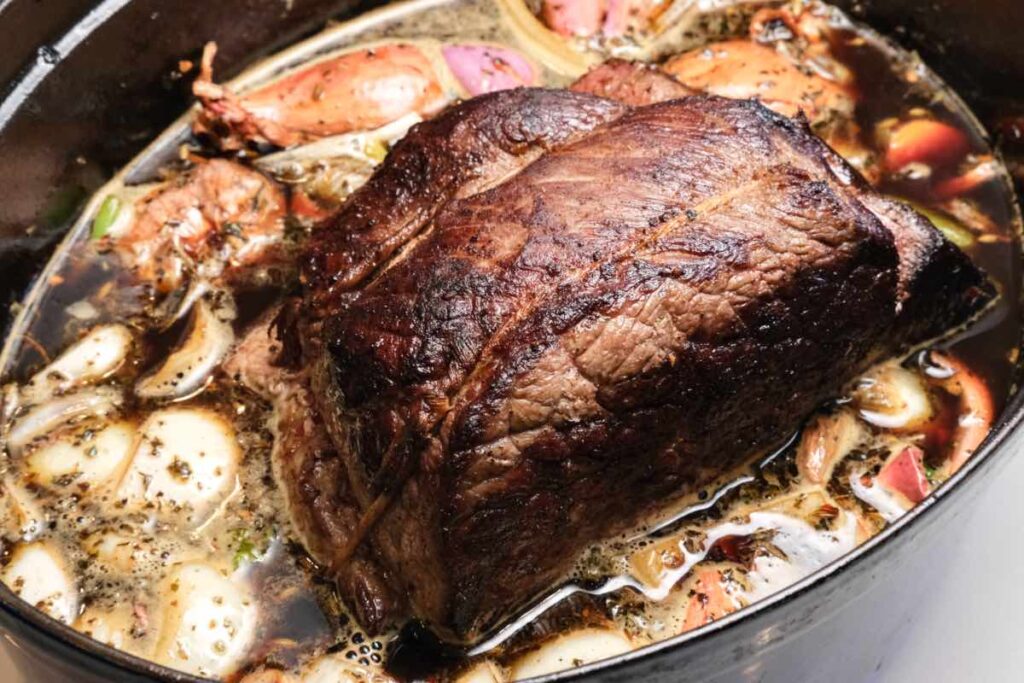
- If you would like to use a leave-in thermometer for the meat, insert it now from the side into the center of the roast. Carefully return the beef to the pan, and pour in any juices that have collected.Bring to a gentle simmer over medium heat and place your pan, uncovered, in the oven, and allow to cook to your desired temperature (see step 1). Turn your meat over every 30 minutes.
Step 5
- When your meat is done, remove from the oven and allow to cool for 1 hour (you may wish to carefully transfer the meat and its juices to a fresh pan so that it will cool more quickly). Cover the pan and transfer to the refrigerator. Allow to cool completely—to 40°F (5°C) to facilitate slicing.
Step 6
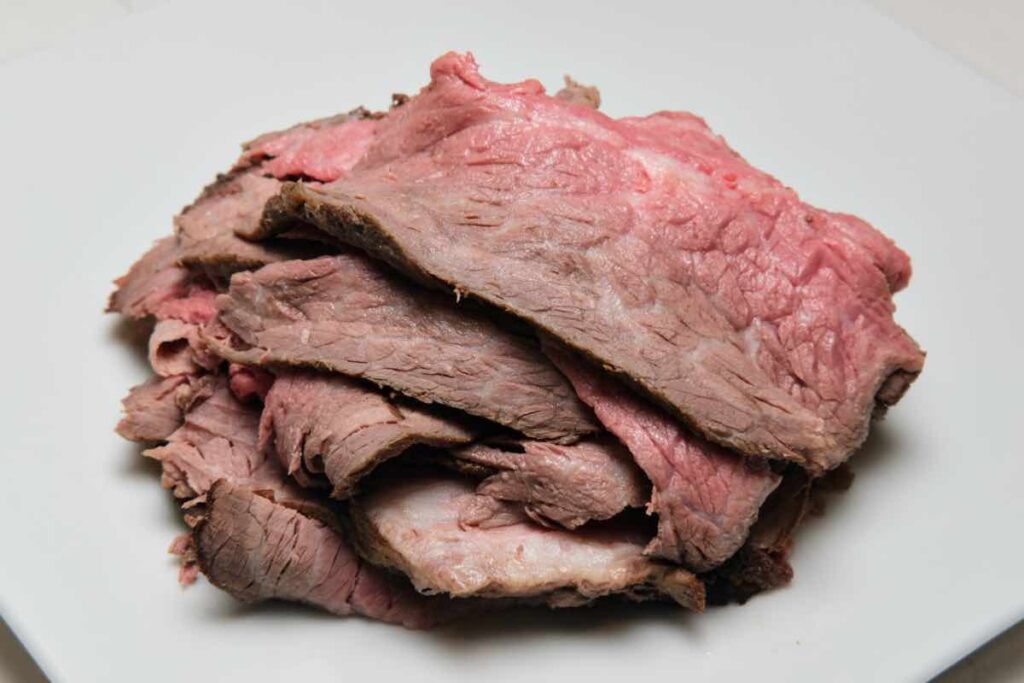
- When the meat has fully cooled, remove it from the refrigerator. If a layer of fat has congealed at the top of the jus, remove and discard it.Place your meat on a cutting board and set aside. Strain the jus into a pan and discard the solids. Heat it to a gentle simmer, then turn down to low. You want the jus to stay warm, but not bubble. Taste and correct seasoning as needed.Chicago beef is traditionally served very thin. You may use a meat slicer, but if you do not have one, a sharp knife will work.
Step 7
- When you are ready to serve, have your French rolls and giardiniera at the ready. Add your thinly-sliced beef to the warm jus.Warm your French rolls and slice lengthwise. Add plenty of beef and giardiniera. You can serve your sandwiches “wet”, dipping it in partly in the jus before serving. I prefer to serve the jus in ramekins on the side, allowing diners to dip each bite as they eat it, lest the sandwiches become too soggy and fall apart.