Homemade Fajita Recipe: Easy Beef, Chicken, or Veggie Options
About this Recipe
By: Rachel
If you’re looking for a homemade fajita recipe that’s flexible, flavor-packed, and easy to customize, you’re in the right place. I’ll walk you through how to make fajitas with beef, chicken, or vegetables. This recipe is perfect whether you’re feeding a crowd or prepping a weeknight meal.
What Are Fajitas? A Tex-Mex Favorite with Sizzle and Smoke
Fajitas are a mainstay of any Tex-Mex restaurant. If you frequent such restaurants, then you have seen heads turn as a blistering-hot, cast-iron skillet announces its presence with sizzles and smoke as it is paraded through the restaurant and set before the lucky diner.
The aforementioned hot platter typically includes beef or chicken along with peppers and onions, seared on very high heat until blackened and charred in spots. Vegetarian options are increasingly available, often including vegetables like portobello mushrooms and zucchini. Seafood fajitas, too, are common.
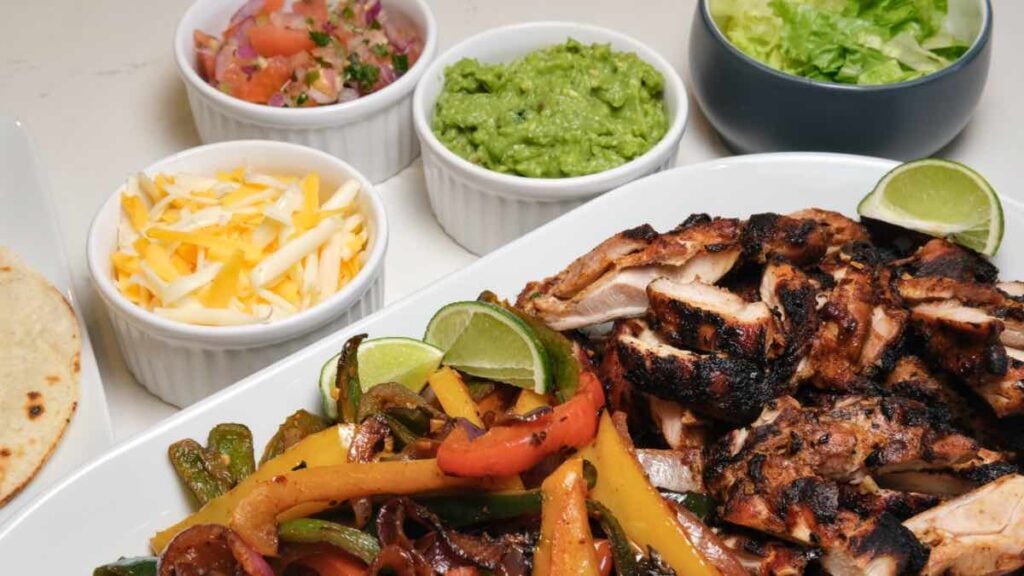
Servers bring a container of warmed flour or corn tortillas, along with any combination of accompaniments: rice, refried or black beans, sour cream, cheese, pico de gallo, guacamole, salsa, or fresh cilantro. You fill the tortillas as your palate, appetite, and soul instruct you—just as you would with a good homemade fajita recipe at home.
The Origins of Fajitas: From Cowboys to Cast Iron Skillets
The history of fajitas can be traced back to the 1930s. This is when vaqueros (cowboys) of South and West Texas were given cheaper, tougher cuts of meat (like skirt or flank) for their meals. The meat was cooked over an open flame, and by the fall of 1969, the first fajita concession stand had opened in Texas.
My Go-To Homemade Fajita Recipe
My favorite fajitas are aggressively spiced with chiles and spices, but with a subtle, umami undertone that makes you crave bite after bite. They are woken up with plenty of fresh lime and cilantro. And then served with a variety of toppings to suit each diner’s preferences.
The method is simple, but the results feel anything but ordinary. Especially when served straight from a hot skillet with warm tortillas and a spread of toppings. This homemade fajita recipe is my go-to.
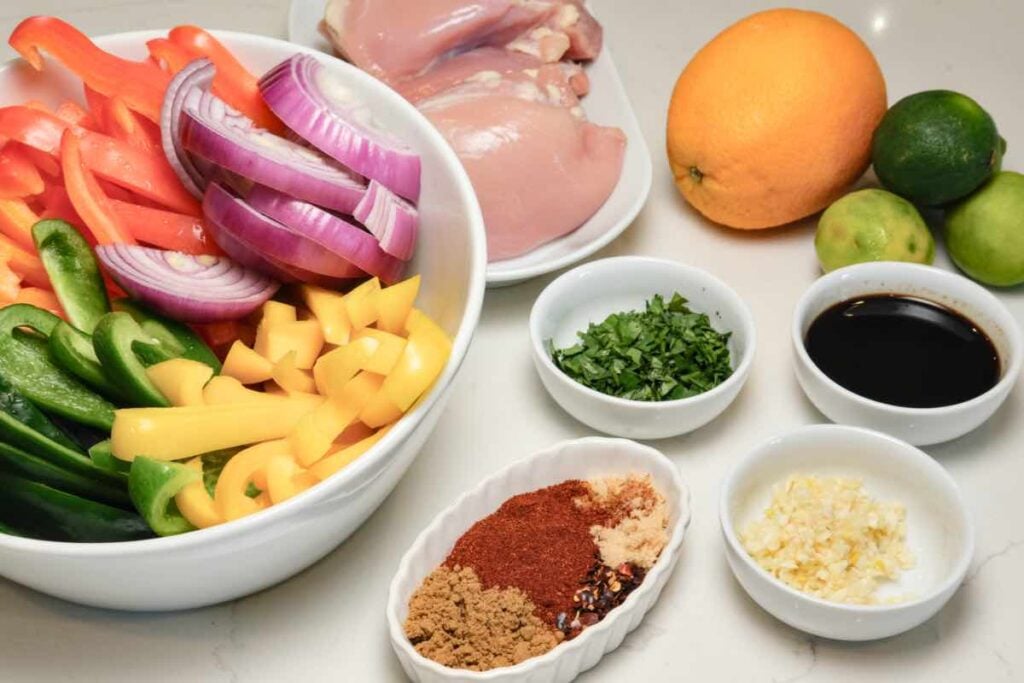
The ingredients are fuss-free. The soy sauce, lime juice, garlic, and pantry spices come together quickly to create a flavorful marinade that works beautifully for beef, chicken, or vegetables.
I like to let everything sit in the marinade for at least 30 minutes, and longer if I have the time. The marinating time allows all those bold flavors to soak in. When it comes time to cook, you can simply fire up the grill or use a cast-iron pan on the stovetop. The trick is high heat. You want that sizzle, that charred edge, and that quick sear that locks in the flavor without overcooking.
Build Your Own Easy Fajita Recipe
Whether the preparation of the day is beef, chicken, or vegetables (or sometimes a combination of all three), my marinade is the same. If you’ve ever wondered how to make fajitas that are big on flavor and easy to pull off—well, worry no more. Just choose the filling you prefer and follow my tips to create the fajitas of your dreams.
And that’s what’s so great about this homemade fajita recipe: it’s extra flexible! It can easily adapt to your preferences. You can scale it up for a crowd. Swap in seasonal vegetables, or play with the spice level depending on who’s at the table. Once you’ve got the basics down—that bold marinade, a hot pan, and quick cooking—the rest is about building your perfect bite, one tortilla at a time.
Make Your Homemade Fajita Night Extra-Delicious
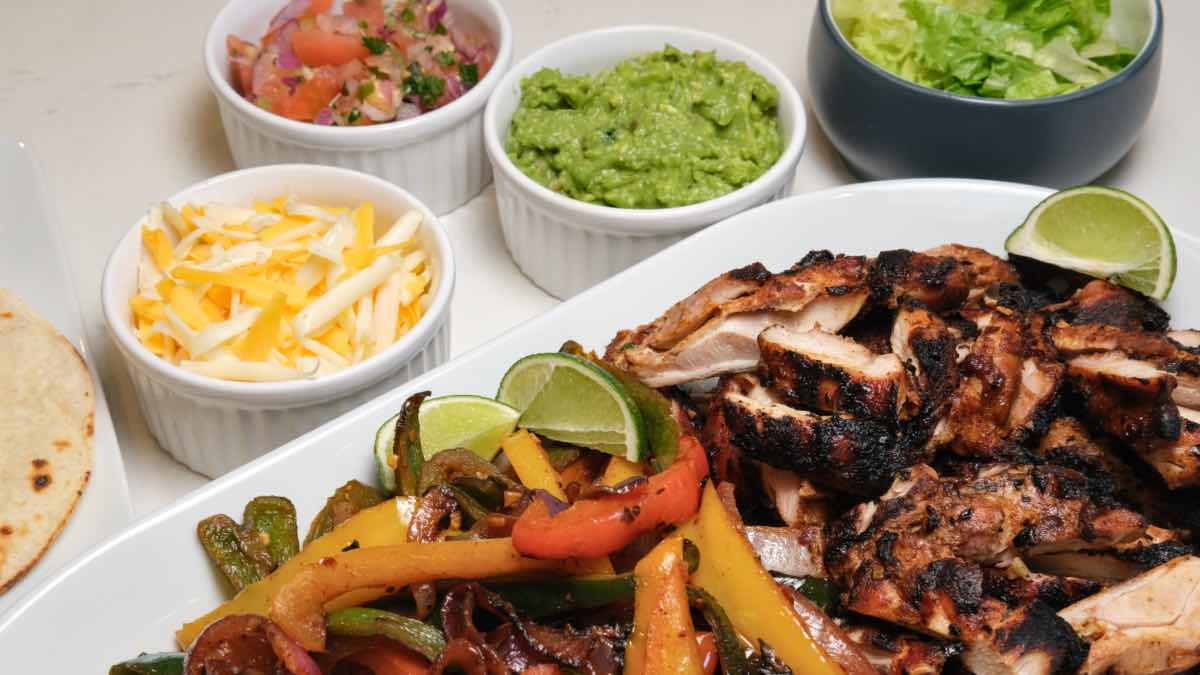
Part of the fun of homemade fajitas is that everyone gets to build their own perfect plate. When you’re planning a fajita night, set things up family-style. A sizzling skillet of beef, chicken, or vegetables, a stack of warm tortillas, and a colorful spread of toppings for fajitas, so everyone can mix and match to their taste.
Classic toppings like shredded cheese, sour cream, guacamole, and fresh salsa are always a hit. But, of course, don’t be afraid to add a twist! Think pickled onions, charred corn, or even a drizzle of crema. A handful of chopped cilantro and a squeeze of lime also bring it all together.
Looking for salsa ideas? Check out the trio of salsas that accompany my creamy guacamole — they’re bold, bright, and made for Mexican-inspired dishes. You might also want to try the avocado salsa I whipped up for my Carne Asada Tacos — it’s fresh, punchy, and perfect with fajitas, too!
Beverage Pairing
By: Olivia
Whether you use beef, chicken, or vegetables for your fajitas, you have a ton of beverage options! With whatever accompaniments you like, you’ll want a bright drink to cut through the dish’s richness. You may want a crisp Sauvignon Blanc or Albariño, or a fruit-forward, fresh Pinot Noir or Gamay. You will also find that brightness in pilsners and blonde ales, or citrus-forward cocktails like a margarita or caipirinha. Because it’s shaping up to be a very hot summer, I would also recommend you pair your fajitas with glasses of refreshing Tinto de Verano!
Beef, Chicken, or Vegetable Fajitas
Equipment
- Kitchen scale or measuring cups and spoons
- Measuring cups and spoons or kitchen scale
Ingredients
For beef fajitas:
- 1 whole beef flank or skirt steak
For chicken fajitas:
- 6 pieces boneless, skinless chicken thighs
For vegetable fajitas (use the vegetables listed below and add)
- 4 large portobello mushroom (sliced)
- 2 medium zucchini (sliced)
For the marinade and filling
- 3 tablespoons olive oil
- 3 tablespoons soy sauce
- 1 tablespoons Worcestershire sauce
- 4 cloves garlic (minced)
- Juice from 2 medium limes plus more for serving
- Juice from 1 medium orange
- ¼ cup (4g) chopped cilantro plus more for serving
- ½ tablespoon red pepper flakes (if you are sensitive to heat, omit or reduce to ½ teaspoon)
- 1 tablespoon cumin
- 1 tablespoon chile powder
- ¼ teaspoon cayenne pepper (omit if you are sensitive to heat)
- 1 teaspoon Kosher salt
- 2 teaspoons brown sugar
- 2 medium onions sliced (red, yellow, or white)
- 2 medium poblano peppers (sliced)
- 1 medium red bell pepper (sliced)
- 1 medium orange bell pepper (sliced)
- 1 medium yellow bell pepper (sliced)
Step by Step Instructions
To marinade:
- In a large bowl, mix the olive oil, soy sauce, Worcestershire sauce, lime juice, orange juice, garlic, cilantro, red pepper flakes, cumin, chile powder, cayenne (if using), salt, and brown sugar. Whisk well to combine.
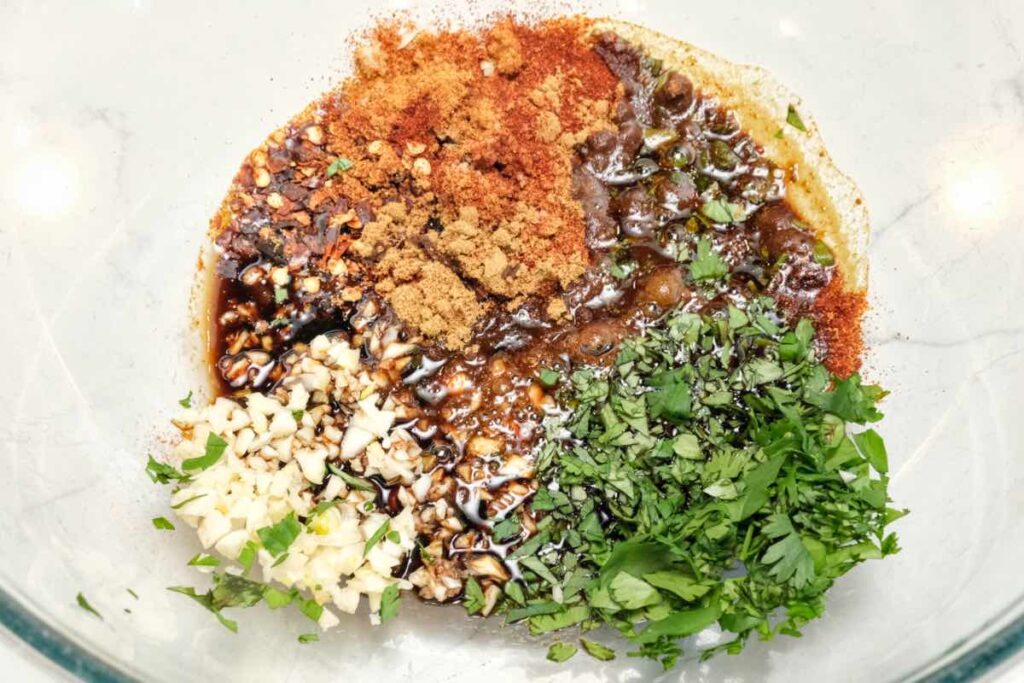
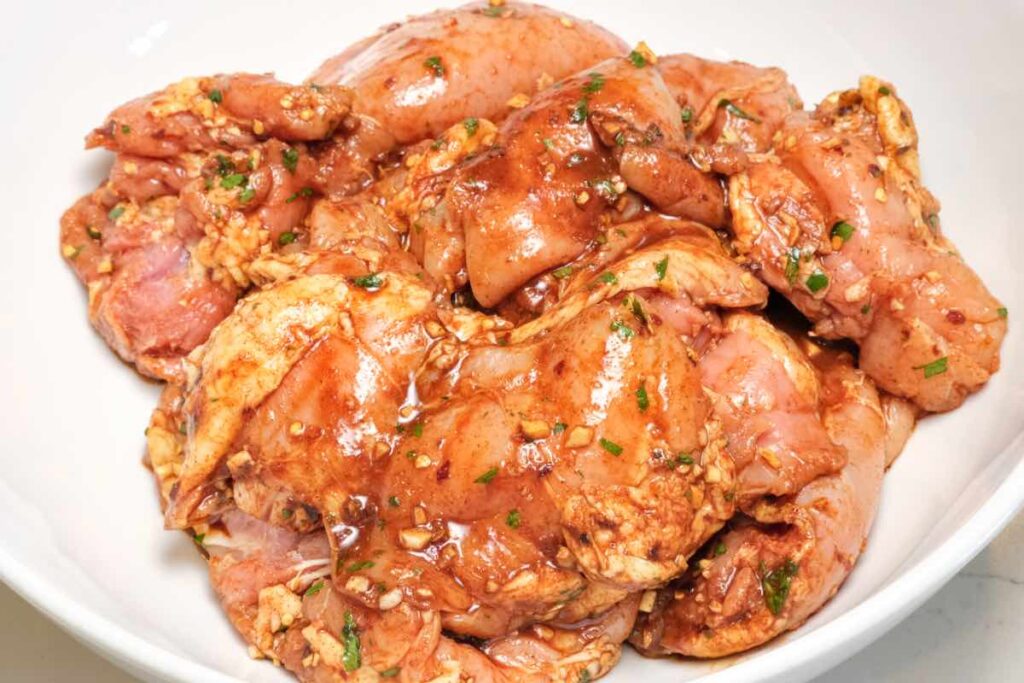
- Add vegetables to one shallow dish or large Ziplock bag, and your meat to another. Divide the marinade between the meat and the vegetables, and cover your dish tightly or close the Ziplock bags, pressing out any air as you do so.
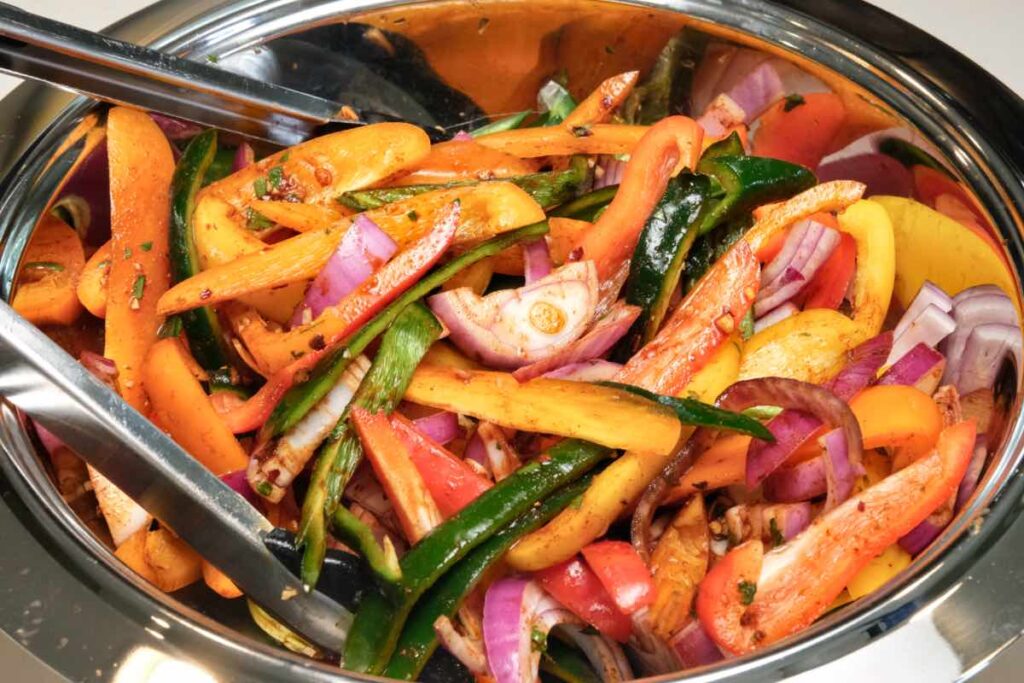
- Refrigerate immediately, and leave to marinate for at least 2 hours or up to 24 hours. (See note if using chicken breasts).
To cook:
- When ready to cook, drain and discard all your marinade, and pat your meat well with paper towels.
- Grilling: Heat your grill to a high heat (at least 500°F or 260°C). Once heated, carefully oil your grill grate with canola or peanut oil (do not use olive oil). I dip a halved onion in oil and run it over the grate using a grill fork.
- Stovetop: Add a thin layer of canola or peanut oil to a cast iron skillet over a high heat until shimmering (throw open your windows and turn on your ventilation fan if you have one!)
- Beef: Cook beef for 3-5 minutes on each side or until it registers 130°F (55°C) for medium-rare meat (a good temperature to ensure that flank or skirt is not overcooked). Allow to rest while you cook the vegetables.
- Chicken: Cook for 5-6 minutes per side or until a temperature inserted to the center of the meat reaches 175°F (80°C) for thighs or 165°F (74°C) for breasts. Allow to rest while you cook the vegetables.
- Vegetables: Ensure the vegetables are dry, patting with a paper towel as needed.Use a nonstick grill grate, or coat a cast iron skillet with a thin layer of canola or peanut oil (do not use olive oil) and heat over high heat until shimmering (you can also do this on your grill, using the grill grate or cast-iron pan).Cook the vegetables in batches, being very careful not to overcrowd your pan. You want your vegetables to char in spots yet remain delightfully crunchy, rather than steam into mush. You may also use more than one pan at a time to cook your vegetables. Depending on your method this may take as little as 3-5 minutes or up to 10-12 minutes. Toss once or twice while cooking.
To serve:
- Slice meat against the grain. Liberally sprinkle the meat and vegetables with fresh lime juice and chopped cilantro. Serve with warm tortillas and accompaniments, such as sour cream, cheese, guacamole, and salsas.