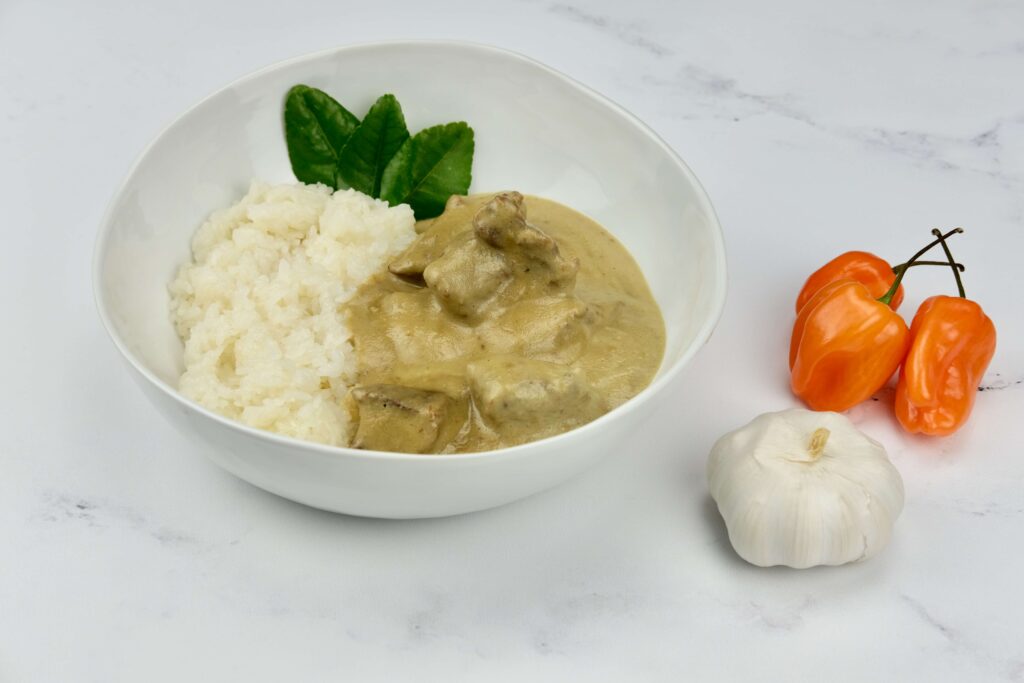
Saucy Indonesian Beef Rendang
About this Recipe
By: Rachel
Indonesian beef rendang is one of those unforgettable dishes that lingers in your memory long after the last bite. Rich with coconut, spices, and slow-cooked tenderness, it’s a flavor-packed experience that tells a story with every spoonful. While the taste is complex and layered, it isn’t hard to make homemade beef rendang.
A Memorable Indonesian Feast to Remember
Our dear friend, Tata, is a gifted cook. One evening, he and his husband hosted us for a multi-course dinner celebrating the foods of Indonesia, his home country. Although it was many years ago now, I remember every delicious bite, from the fresh, rich, smoky kohu kohu (salad of cured salmon and bean sprouts) to the pastel green cake delicately flavored with pandan leaf. But the standout for me was his unforgettable homemade beef rendang.
Falling in Love with Indonesian Beef Rendang
My favorite dish, though, was the rendang daging, a rich and complex Indonesian beef dish simmered in coconut milk and aromatics. It was served over a bed of dream-haunting, coconut-scented rice that I’ve tried countless times (and failed) to replicate… no matter how many times Tata has patiently explained the recipe to me.
The Origins of Beef Rendang: Flavor Meets Function
Tata’s homemade beef rendang is based on Sri Owen’s recipe from his brilliant book, The Indonesian Kitchen. The author explains that rendang originated in West Sumatra from the need to preserve meat in a hot climate without the benefit of refrigeration. The coconut milk acts as a preservative, in addition to giving the beef a rich and memorable flavor.
Why This Version of Indonesian Beef Rendang Works
A traditional Indonesian beef rendang requires that you cook the meat until the coconut milk has reduced completely to oil, at which point the meat begins to fry. The meat absorbs the oil, resulting in a tasty dish, but not a saucy one. I wanted more of that unbelievable flavor; I wanted it to become a thick, decadent sauce that I could bathe in, I mean, spoon generously onto a bed of rice.
This is my take on the traditional rendang—it is thick and saucy, more like a curry—but stays true to the original flavors of the dish. My version simmers lazily all day. However, you must resist the temptation to make it in your slow-cooker. This Indonesian beef rendang must be cooked uncovered so that the sauce can reduce, thicken, and caramelize. Trust me—this isn’t a job for your slow cooker. The magic happens when the steam escapes, the sauce thickens, and the aroma fills your kitchen.
Other Dishes To Love
If you love the bright, spicy, coconut-rich flavor of this beef rendang, you will also love my Tom Kha Gai—a sour, spicy, and rich Thai soup. Another recipe to try is my richly-flavored Butter Chicken.
Beverage Pairing
By: Olivia
Spicy food should be paired carefully! The secret is to avoid wines that are high in tannin, oak, or alcohol. The spice in the food exaggerates these elements in wine and can make your beverage, no matter how delicious on its own, nearly undrinkable. Your best bet is fruit-forward, lighter wines. For red, the Violet Wine team is quick to grab a Gamay from Beaujolais or Zweigelt from Austria (we’re partial to the Esterhazy Zweigelt in the shop). For white wine, we have great enthusiasm for spicy foods and Riesling. Riesling gets a bad rep but is often a favorite of wine enthusiasts and professionals alike. Give it a chance with this dish as the absolutely perfect pairing! You cannot go wrong with an off-dry Riesling, like Melsheimer Hand Werk or Nik Weis St. Urbans-Hof Riesling.
Saucy Indonesian Beef Rendang
Equipment
- Wok or wide, deep skillet
Ingredients
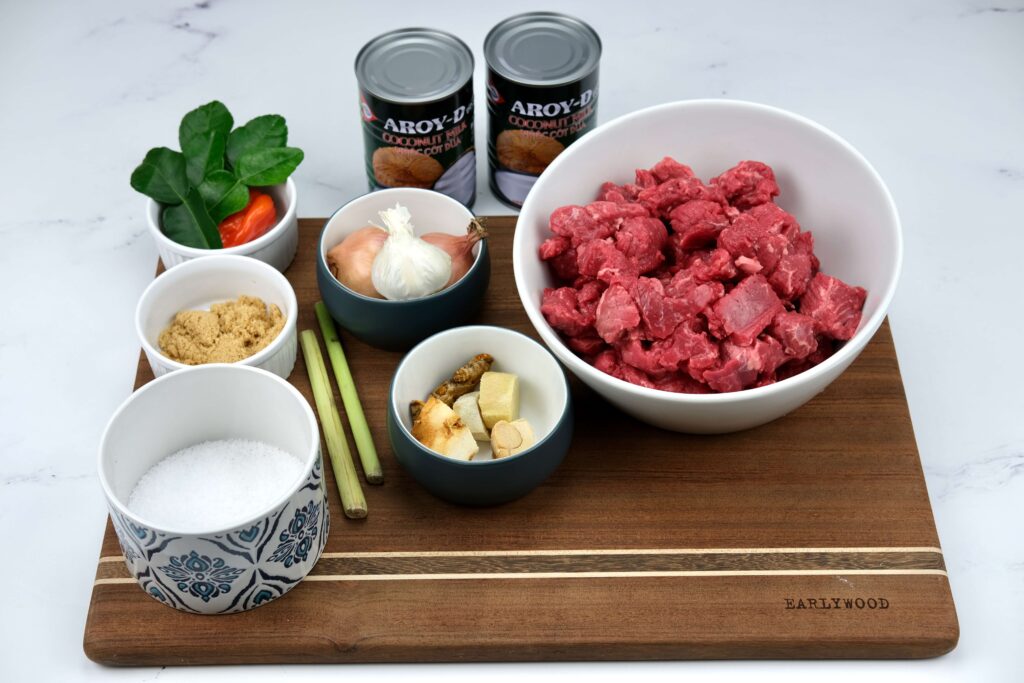
- 3 cans full-fat coconut milk
- 1 can coconut cream if you cannot find coconut cream, use two extra cans of coconut milk and use only the creamy solids that have collected at the top, reserving the liquid for another use.
- 4 medium shallots (roughly chopped)
- 4 cloves garlic (peeled and smashed)
- 1 tablespoon (6g) peeled fresh ginger (about 1 inch), roughly chopped
- 1 tablespoon (6g) peeled fresh galangal (about 1 inch), roughly chopped
- 2 teaspoons fresh turmeric root (about ¼ inch), roughly chopped
- 1-2 whole habanero peppers (stems removed) or your favorite fresh, hot chiles
- 3 pounds (1 ⅓ kilos) beef brisket cut into large chunks and trimmed of visible fat
- 1 ½ tablespoons kosher salt (or to taste)
- 3 tablespoons brown sugar (or to taste)
- 1 stem lemongrass
- 8 fresh lime leaves
Step by Step Instructions
Step 1
- To a high-powered blender, such as a Vitamix, add the coconut milk, shallots, garlic, ginger, galangal, turmeric, and habanero. Blend on the highest speed for 1-2 minutes, or until the mixture is completely smooth.
Step 2
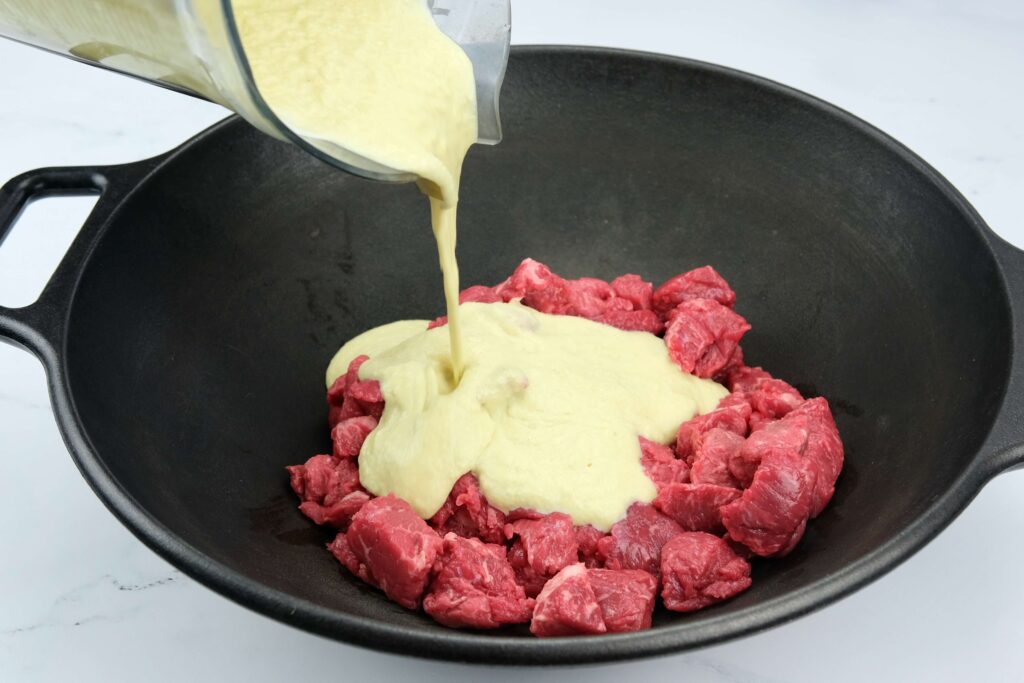
- Add the beef to a large, heavy wok or wide, deep skillet. Cast iron or enameled cast iron is best (as the sauce reduces, it will burn more easily in stainless steel).Pour the contents of the blender over the beef. Add coconut cream, salt, and brown sugar, and stir to combine. Place on a burner over medium heat.
Step 3
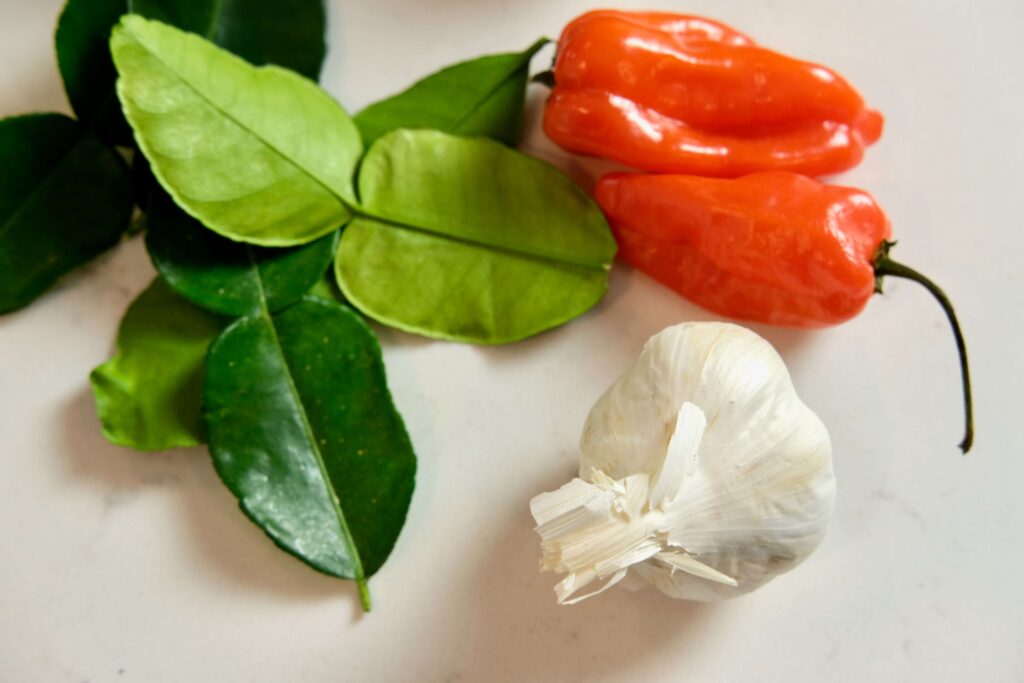
- While you wait for the sauce to come to a simmer, prepare the lemongrass and lime leaves. On a large cutting board, remove the outer 1-2 thick outer layers of the lemongrass. Cut in half crosswise, and add to the sauce. Tear the lime leaves slightly at the edges to help release the oils, and add these to the sauce as well.
Step 4
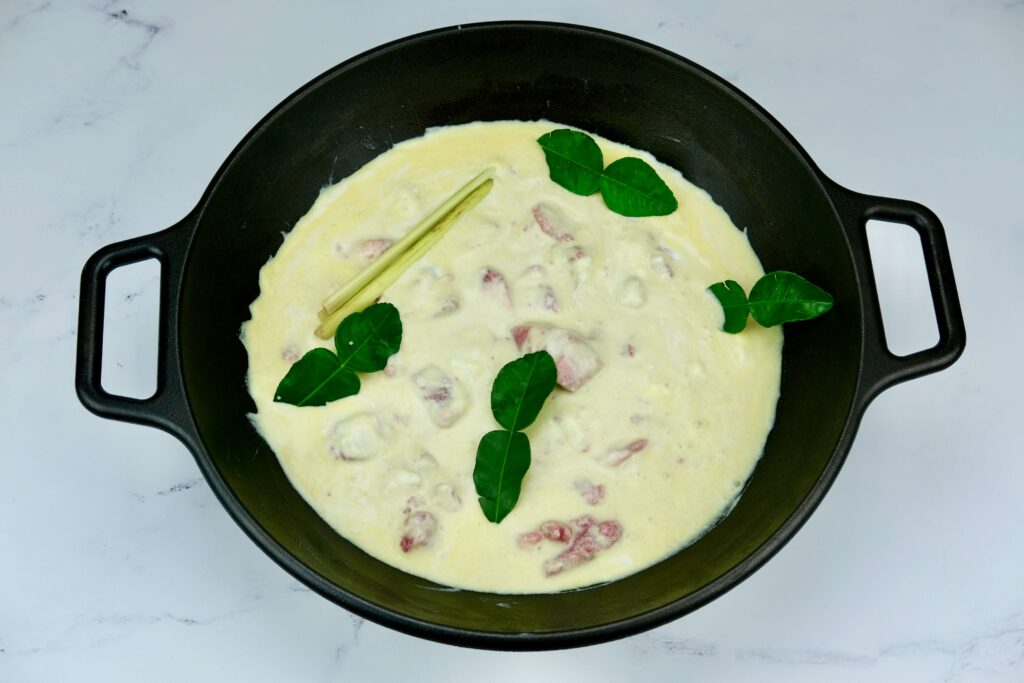
- Adjust the heat to ensure that the sauce bubbles gently, uncovered, without sticking or burning at the bottom. Stir periodically.
- The dish will take 6-8 hours to cook, and is done when the sauce is thick and silky (like gravy), and the meat is tender, but not falling apart. If any grease has collected at the top of the pan, collect and discard.
Step 5
- Taste the sauce and adjust to your preferences. You may wish to add more salt or brown sugar. If you like a spicier sauce, you may slit open an additional pepper and let it simmer in the sauce during the cooking process, and discard it at the end.
- If you desire a more sour flavor, you may add fresh lime juice once you have removed the finished dish from the heat.
Step 6
- When you are happy with your sauce, remove and discard the lemongrass and lime leaves.
- Serve over white rice (or try your luck with coconut rice)!