Vegetable Paella: A Flavorful, Plant-Based Classic
About this Recipe
By: Rachel
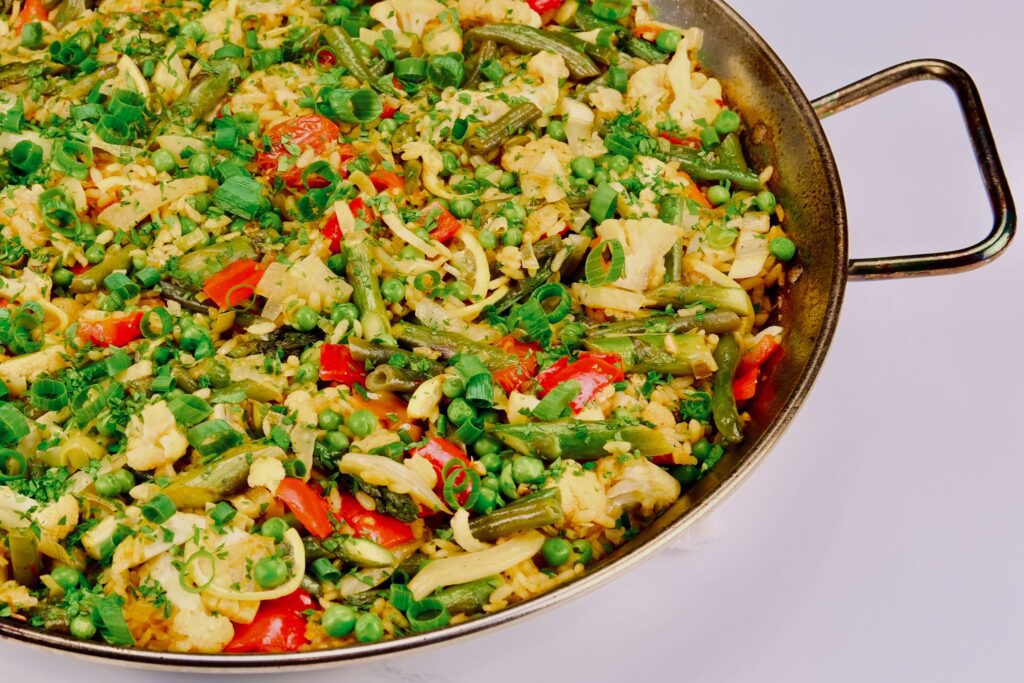
Some dishes first capture the imagination before they ever reach the plate. For me, paella was one of those—a golden, aromatic dream. This plant-based paella recipe brings that vision to life with vibrant produce, bold spices, and deep flavor profiles.
You can build an incredible Spanish meal around this paella with these stuffed piquillo peppers and refreshing glasses of Tinto de Verano.
The Allure of Paella in Story and Imagination
Perhaps you, like me, are a reader—and were, as a child, unusually enchanted by the foods you read about in books. I dearly wish for the raspberry cordial of Anne of Green Gables. Bewitchingly ruby-red in an old-timey corked glass bottle hidden away in a farmhouse pantry. I wanted Ma’s vanity cakes from Little House on the Prairie. Giant bubbles so light and airy they would simply melt on the tongue. How I wanted to try roast goose, red velvet cake, and Turkish delight. Note that when I finally tried Turkish delight, aged 33, it was a bitter disappointment. Roast goose remains a dream out of reach.
And then, there was paella—perhaps the most magical of them all! With its golden hue, open-fire cooking, and a name that felt like a spell cast across the pages of every book that mentioned it, paella lingered in my imagination until I finally created a version I could enjoy: this richly-layered, soul-satisfying vegetable paella recipe.
Creating a Vegetable Paella for the Modern Table
Traditional paella features proteins like prawns, mussles, calamari, octopus, and chorizo—off-limits for my kosher(ish) diet. I wanted to create a plant-based paella recipe that would be as complex and alluring in taste as the paellas of my novels, dreams, and imagination, and this is the result.
Since almost all paella recipes are built around meat and seafood, this vegetable paella recipe is a great way to give vegetarian, vegan, or kosher dinner guests a meal that they might not otherwise get to experience.
Layers of Flavor in Every Bite
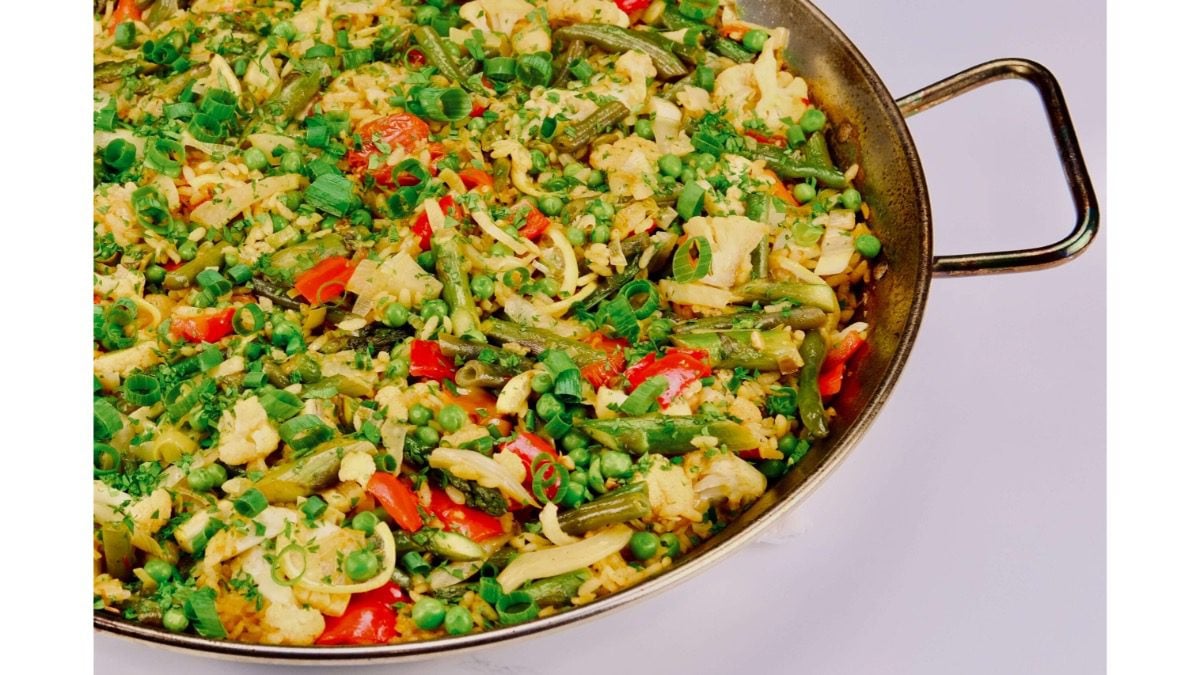
This plant-based paella recipe leans into deep, layered flavors, thanks to the slow-cooked sofrito, dry white wine, vegetable stock, and a warm chorus of smoked paprika, saffron, and cayenne.
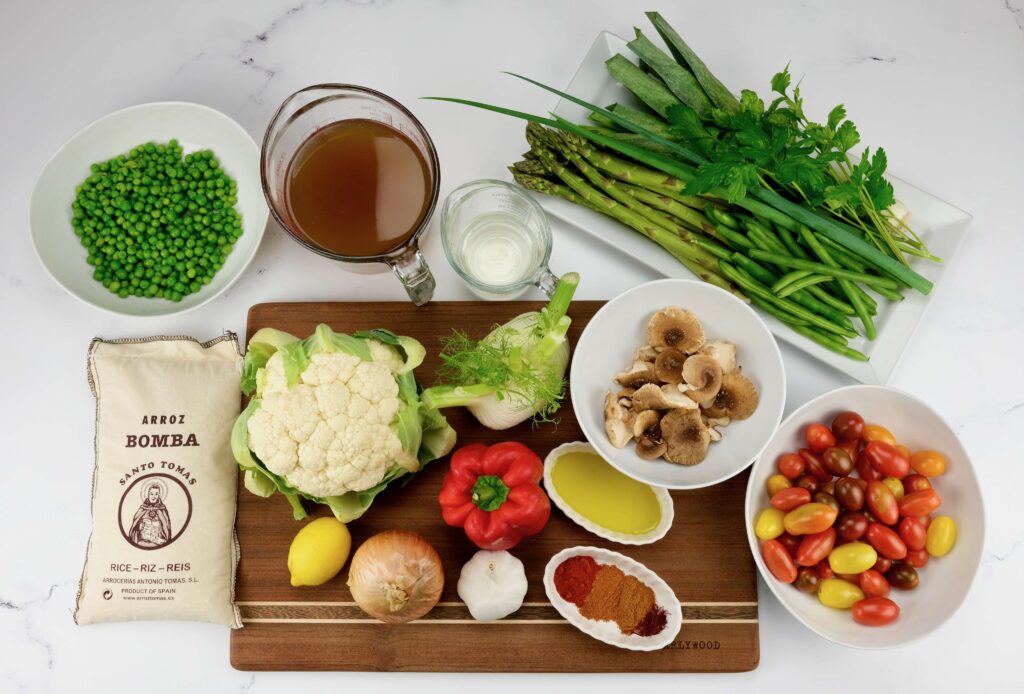
A vibrant mix of vegetables—shiitake mushrooms, fennel, cauliflower, sweet red pepper, and crisp green beans—brings not only texture but also a sense of abundance. Thin slices of lemon, tucked into the rice as it finishes cooking, perfume the dish with brightness. The final garnish of peas, parsley, and green onion adds color and fresh contrast.
The Right Pan and Cooking Method for Your Vegetable Paella
Although paella can be used in a large skillet, it is helpful to use an authentic carbon steel paella pan. It is also important to use a burner that is large enough to accommodate the pan that you choose. If it is too small, your paella will not cook evenly, and you will wind up with overcooked rice in some spots and raw rice in others.
Traditional paella is often cooked over a grill or open fire to accommodate the large pan it is served in. If you have no burner large enough, consider cooking your paella in a hot oven (better yet, a convection oven). This will ensure a more even distribution of heat than a small burner. I set my pan over three gas burners when making vegetable paella, and rotate it periodically while cooking.
Beverage Pairing
By: Olivia
The beauty of this vegetable paella is its adaptability to wine pairing. Only want to open up one bottle of wine? Open a dry Verdejo with its citrus and vegetal notes to both cook with and sip on. Feeling like you want a beverage with a bit more body? Consider purchasing a rosé or red wine that has Tempranillo or Garnacha. The depth and herbaceousness present in both grapes would be great next to the paella.
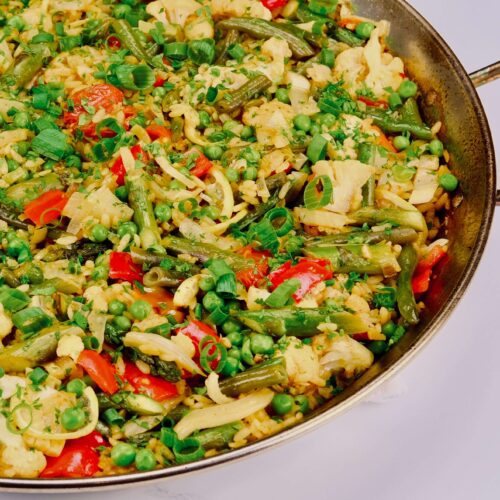
Vegetable Paella
Equipment
- Kitchen scale or measuring cups and spoons
- Measuring cups and spoons or kitchen scale
Ingredients
- 4 tablespoons olive oil divided
- 1 large finely-chopped leek
- 12 ounces (340g) sliced shiitake mushrooms
- ½ head chopped cauliflower
- 1 bulb chopped fennel
- 1 medium red bell pepper
- ½ pound (225g) green beans
- ½ pound (225g) asparagus
- 1 minced yellow onion
- 6 cloves minced garlic
- ½ cup (120mL) dry white wine
- 1 pint (340g) cherry tomatoes or 1 cup whole canned San Marzano tomatoes
- 1 tablespoon smoked paprika (or 1 teaspoon hot paprika + 1 teaspoon smoked paprika)
- ½ teaspoon saffron threads
- 1 teaspoon cayenne pepper (reduce to ½ or ¼ teaspoon if you are sensitive to spice)
- ½ teaspoon kosher salt
- 2 cups (450g) Bomba rice or arborio, if Bomba is unavailable
- 1 medium lemon thinly-sliced, including rind
- 1 cup (170g) green peas
- 6 cups (1 ½ liters) Simple, Flavorful, Umami Vegetable Stock; Rich, Delicious, and Worth It Chicken Stock; or any high-quality stock (adjust as needed)
- 1 medium green onion sliced
- ⅓ cup (20g) finely-chopped Italian parsley
Step by Step Instructions
Step 1
- In a large skillet (not the pan in which you will make your paella), cook the vegetables. Heat 2 tablespoons olive oil over medium-low heat, and add the chopped leeks. Sauté for 2-3 minutes, or until softened. Increase heat to medium, and add the shiitake mushrooms, cooking for 3 minutes more. Now add the asparagus, cauliflower, fennel, red pepper, and green beans. Season with sea salt, and toss briefly to combine. Remove from heat and set aside.

Step 2
- In a saucepan, begin to heat the stock to a low simmer.
Step 3
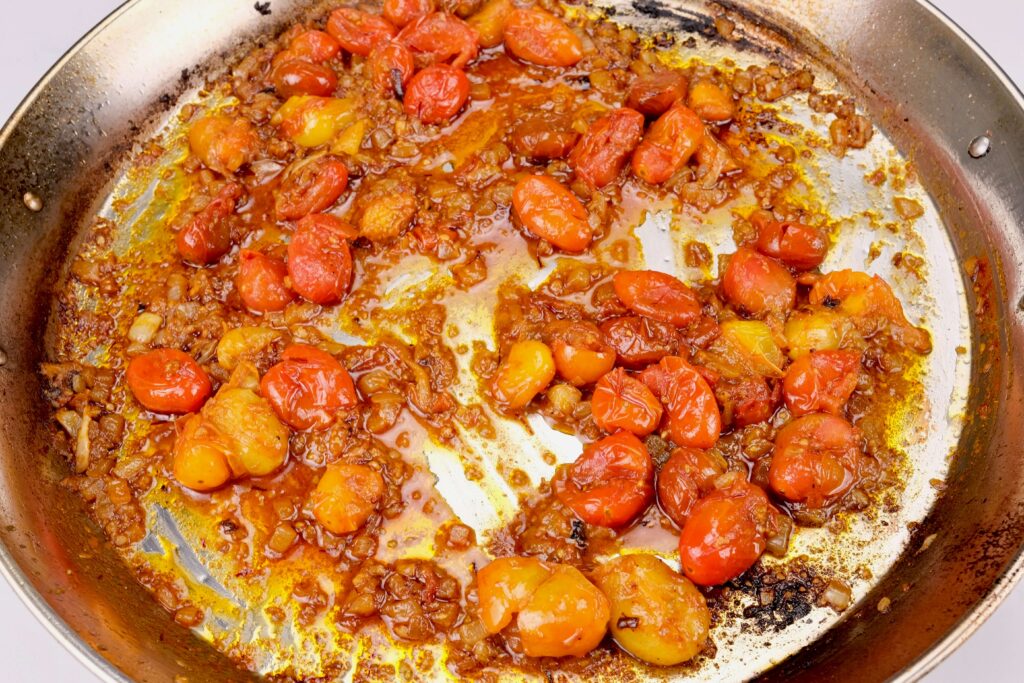
- Now make the sofrito. Coat a large paella pan with 2 tablespoons olive oil, and heat the burner to medium-low. Add the onion, and sauté for 5-6 minutes, or until soft and translucent. Add the garlic, and cook for another minute or two, then add the tomatoes and wine. Simmer until cooked down, 20 to 30 minutes. Stir in the paprika, saffron, cayenne, and salt. Cook for another 7-10 minutes.
Step 4
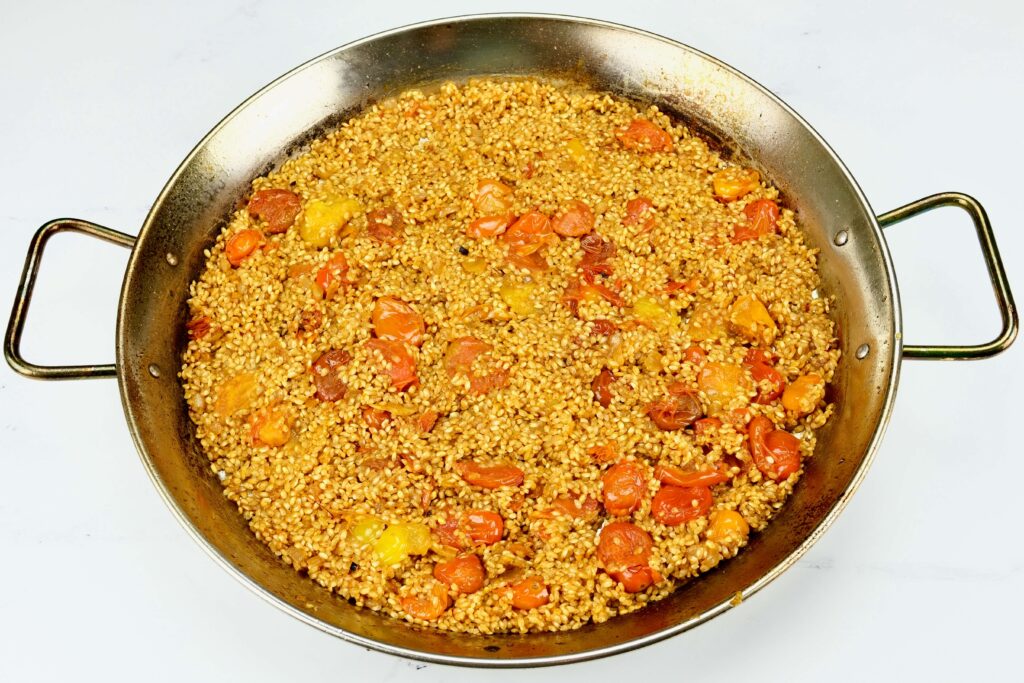
- Add the rice, and cook it in the sofrito for 3-5 minutes. Spread the rice evenly over the surface of the pan. Now pour the simmering broth over the rice. You will add the vegetables later to avoid overcooking them.
Step 5
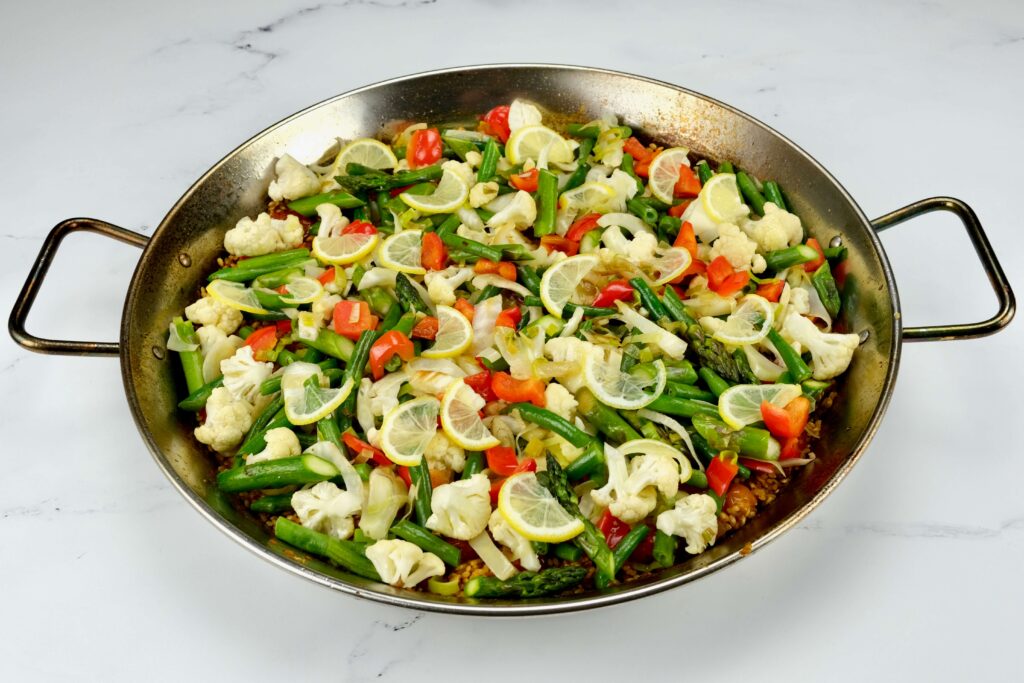
- Simmer, uncovered, for around 25 minutes. Do not stir as you would a risotto.Once the rice is mostly cooked, but still has a slight crunchy bite to it, layer on the cooked vegetables and the sliced lemon. Cook for about 5 minutes more, until rice is cooked through, adding the peas in the last 2 minutes of cooking. To obtain a crust (soccarat) on the bottom of your paella, proceed to the next step.
Step 6
- Paella should not be creamy like a risotto, and needs to dry out fully on the bottom to create the desired crispy, brown crust at its base (the socarrat). To obtain a crust on the bottom of your pan, turn your burner down to low heat during the last 5-10 minutes of cooking. It helps to use an authentic paella pan, as its unique construction will help ensure a crispy bottom. Paella aficionados listen carefully for a pleasant crackling sound and sweet, nutty smell in the last minutes of cooking, which indicates browning, but pay attention and remove the pan if you smell the rice burning.
Step 7
- Once you are satisfied that your paella is done, garnish with green onions and parsley, and serve immediately.